

Sebaceous Cyst Treatment In HyderabadThat Little Lump Under Your Skin — Here's What It Actually MeansCall: 90328 02805Sebaceous Cyst Treatment In Hyderabad is something more people search for than you'd think and for good reason. You noticed it a few weeks ago. A small, painless bump under your skin that wasn't there before. Now it's …
Sebaceous Cyst Treatment In Hyderabad
That Little Lump Under Your Skin — Here’s What It Actually Means
Call: 90328 02805
Sebaceous Cyst Treatment In Hyderabad is something more people search for than you’d think and for good reason. You noticed it a few weeks ago. A small, painless bump under your skin that wasn’t there before. Now it’s bigger, or it’s started to feel tender when you touch it, and Google has become your new best friend at 11 PM.These cysts are incredibly common, they can show up almost anywhere on the body, and while most are harmless, they rarely go away on their own. If you’re staring at one right now, wondering whether it needs a doctor’s attention or if it’ll just disappear, this guide walks you through everything, in plain language, no medical jargon overload.
Sebaceous Cyst Surgery Treatment In Hyderabad
Sebaceous cyst surgery treatment in Hyderabad has become far more accessible and far less intimidating than most people expect. What used to sound like a “big operation” is actually a quick, local-anesthesia procedure that many patients complete in under an hour, and walk out the same day. The goal of this article is simple: help you understand what you’re dealing with, when it’s time to see a specialist, and what treatment actually looks like from start to finish.
What Exactly Is a Sebaceous Cyst?
A sebaceous cyst is a small, slow-growing sac that forms just beneath the surface of your skin. It usually develops when a hair follicle or oil-producing gland gets blocked, and the skin cells and oily material that would normally shed off instead get trapped underneath, forming a soft, round lump.
They’re most commonly found on the:
- Scalp
- Face and neck
- Back and shoulders
- Chest
- Groin area
Most of these cysts are completely benign, meaning they’re not cancerous and they’re not dangerous by themselves. But that doesn’t mean they should be ignored, especially if one starts growing, hurting, or interfering with your daily life.
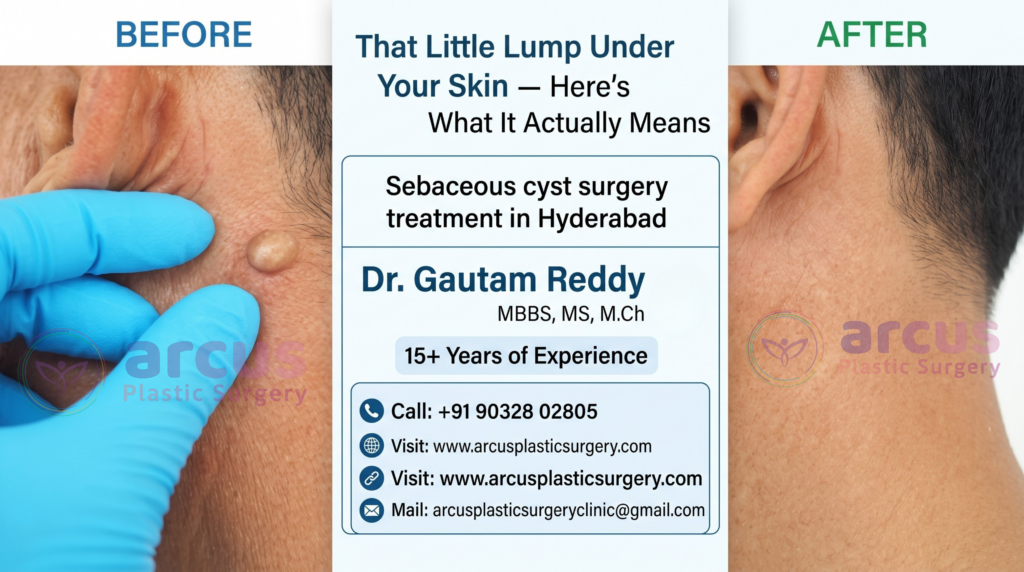
Is It the Same as an Epidermoid Cyst?
You’ll often see “sebaceous cyst” and “epidermoid cyst” used as if they’re identical. Technically, they’re slightly different — true sebaceous cysts come from oil glands, while epidermoid cysts form from skin cells. In everyday conversation, and in most clinics, both are simply called sebaceous cysts because they look, feel, and get treated in almost the same way.
Sebaceous Cyst or Something Else? How to Tell the Difference
Not every bump under the skin is a sebaceous cyst, and it helps to know how they compare to other common lumps people confuse them with.
Lipoma: A lipoma is a soft fatty growth that also sits under the skin, but it tends to feel doughier and less firm than a cyst, and it usually doesn’t have a visible central punctum (the tiny dark dot cysts often show).
Boil or abscess: A boil develops quickly, is usually red and painful from the start, and is caused by a localized bacterial infection rather than a blocked gland. Cysts, by contrast, tend to grow slowly and painlessly before any infection sets in.
Swollen lymph node: Lymph nodes are typically found in specific areas — the neck, underarms, groin — and often appear alongside an infection or illness elsewhere in the body. They also tend to feel firmer and are usually more tender than a simple cyst.
If you’re not sure which of these you’re dealing with, that uncertainty alone is a good reason to get it examined rather than guess.
What Causes These Cysts to Form?
There isn’t always a clear, single reason a cyst develops. That’s part of what makes them frustrating — they can appear seemingly out of nowhere. That said, a few common factors tend to play a role:
- Blocked hair follicles or oil glands — the most frequent trigger
- Skin injury or trauma — a cut, scratch, or acne scar can sometimes lead to a cyst forming later
- Genetics — if cysts run in your family, you may be more prone to developing them too
- Excess oil production — skin that produces more sebum than usual can clog more easily
- Certain skin conditions — like acne, which increases the chance of blocked pores
One thing worth clearing up: eating oily or fried food does not cause sebaceous cysts. That’s a common myth. The cause is mechanical — a blockage under the skin — not dietary.
Common Myths About Sebaceous Cysts
Because these cysts are so visible and so common, a lot of misinformation floats around about them. A few worth clearing up:
Myth: You can pop it like a pimple and it’s gone for good. Reality: The cyst has a sac underneath. Squeezing out the contents leaves the sac behind, so it almost always refills.
Myth: Only unhygienic skin gets cysts. Reality: Cysts form due to blocked glands, not poor hygiene. Even people with very clean skincare routines develop them.
Myth: All cysts eventually turn into something serious. Reality: The overwhelming majority of sebaceous cysts are benign and stay that way. Removal is usually about comfort, infection risk, or appearance, not cancer risk.
Myth: Surgery leaves a bigger mark than the cyst itself. Reality: With a trained surgeon using fine sutures and proper technique, the resulting scar is typically far less noticeable than a long-standing, inflamed cyst.
How Do You Know If It’s a Sebaceous Cyst?
Most sebaceous cysts share a few telltale features:
- A round, smooth, movable lump under the skin
- Slow, gradual growth over weeks or months
- Usually painless, unless infected
- A small central “punctum” (a tiny dark dot) is sometimes visible on the surface
- Occasionally releases a thick, yellowish, foul-smelling discharge if squeezed or irritated
If your bump matches this description, there’s a good chance it’s a sebaceous cyst. But self-diagnosis has its limits, and that’s where a proper clinical examination matters.
When Should You See a Doctor?
You don’t need to rush to a clinic the day you spot a tiny painless bump. But you should book a consultation if you notice any of the following:
- The lump is growing quickly
- It’s become red, warm, or painful
- There’s pus or foul-smelling discharge
- It’s located somewhere that catches on clothing or jewelry
- It’s affecting your confidence or you simply want it gone
An infected cyst, in particular, shouldn’t be left untreated. Left alone, an infection can worsen, spread, and make the eventual removal more complicated.
Can a Sebaceous Cyst Go Away on Its Own?
Sometimes, small cysts shrink slightly over time. But here’s the honest truth — they very rarely disappear completely without treatment. Because the cyst has a wall (a sac) under the skin, simply popping or draining it at home does not solve the problem. The sac remains, and the cyst typically fills back up again within weeks.
This is why trying to squeeze, prick, or “pop” a cyst yourself is genuinely one of the worst things you can do. It increases the risk of:
- Infection
- Scarring
- Incomplete removal (meaning it comes back, often bigger)
- Painful inflammation
If you want it gone for good, the sac itself needs to be removed — and that’s a job for a trained surgeon, not a bathroom mirror and a sterilized needle.
Diagnosis: What Happens at the Clinic
A consultation for a suspected sebaceous cyst is usually simple and quick. The surgeon will typically:
- Examine the lump visually and by touch
- Ask about how long it’s been there and whether it’s changed
- Check for signs of infection or inflammation
- In some cases, recommend an ultrasound to confirm it’s a cyst and not something else (like a lipoma or an enlarged lymph node)
This step matters more than people realize. Not every lump under the skin is a sebaceous cyst, and getting an accurate diagnosis before treatment avoids unnecessary worry — or the wrong approach.
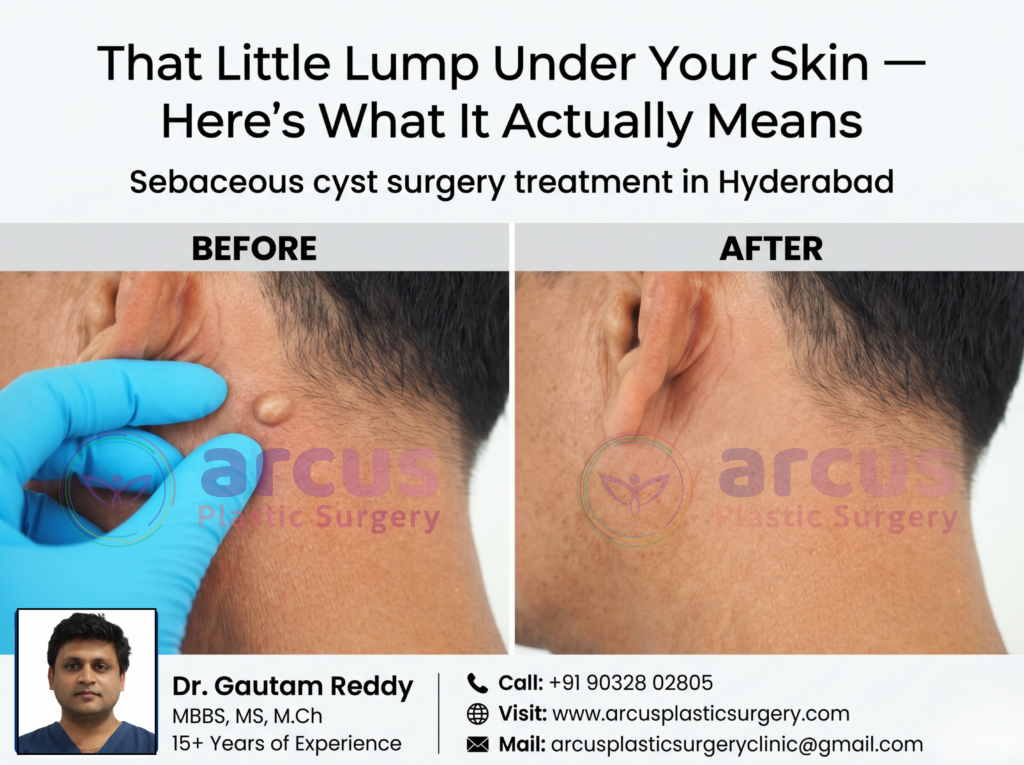
Treatment Options for Sebaceous Cysts
Depending on the size, location, and condition of the cyst, a few different approaches may be considered.
1. Watchful Waiting
If the cyst is small, painless, and not bothering you, some doctors may simply recommend monitoring it. Not every cyst needs immediate intervention.
2. Steroid Injection
For an inflamed cyst that hasn’t fully abscessed, a steroid injection can sometimes reduce swelling and discomfort temporarily. This isn’t a permanent fix, but it can help manage symptoms in the short term.
3. Drainage
If the cyst is infected and has formed a painful, pus-filled abscess, drainage may be needed first to relieve pressure and clear the infection. This is often followed by a proper excision once the inflammation settles down.
4. Complete Surgical Excision
This is the gold-standard treatment for a sebaceous cyst, and honestly, it’s the only method that reliably prevents recurrence. The surgeon removes the entire cyst, including the sac wall, through a small incision under local anesthesia. Because the whole sac is taken out — not just the contents — the cyst has nowhere to regrow from.
What Sebaceous Cyst Surgery Actually Involves
If the word “surgery” makes you nervous, take a breath — this isn’t a major operation with a long hospital stay. Here’s what a typical procedure looks like:
- Local anesthesia is applied to numb the area completely. You’re awake, but you won’t feel pain.
- A small incision is made over the cyst.
- The entire cyst sac is carefully removed to prevent regrowth.
- The area is cleaned and stitched, usually with fine sutures to minimize scarring.
- You go home the same day — no overnight stay required in most cases.
The whole procedure typically takes anywhere between 20 to 45 minutes, depending on the size and location of the cyst.
Recovery After Surgery: A Day-by-Day Look
Recovery from a sebaceous cyst excision is generally short and manageable:
- Day 1–2: Mild soreness and slight swelling around the area is normal. Keeping the site clean and dry is the main priority.
- Day 3–5: Discomfort usually fades noticeably. Most people are back to desk jobs and light routines by now.
- Day 7–10: Stitches, if used, are typically removed at this stage during a quick follow-up visit.
- Week 3–4: The area continues to heal, and any redness from the incision gradually fades.
Do’s and Don’ts During Recovery
Do:
- Keep the wound clean and follow the dressing schedule given to you
- Take any prescribed antibiotics or pain relief as directed
- Watch for signs of infection, like increasing redness, warmth, or discharge
- Attend your follow-up appointment for suture removal
Don’t:
- Pick at scabs or stitches
- Get the wound wet in the first day or two unless cleared by your surgeon
- Do heavy lifting, intense workouts, or contact sports for about a week
- Expose the healing area to direct sun without protection
Scarring is generally minimal, especially when the procedure is performed with careful surgical technique — something an experienced plastic surgeon pays close attention to, since cosmetic outcome matters just as much as removing the cyst itself.
Why Choose a Plastic Surgeon for Cyst Removal?
Here’s something a lot of people don’t think about until after the fact: a sebaceous cyst can be removed by many types of doctors, but the way it’s removed makes a real difference to how the scar looks afterward.
A plastic surgeon brings a level of precision to wound closure and scar management that general procedures don’t always prioritize. This matters even more when the cyst is on a visible area like the face, neck, or scalp.
Arcus Plastic Surgery, led by Dr. Gautam Reddy in Kukatpally, Hyderabad, is set up specifically for these kinds of day-care surgical procedures. With years of surgical experience and a focus on minimal scarring and precise technique, the clinic handles cyst removals as a routine, well-managed part of its practice — from diagnosis through to a clean, careful closure.
Can Sebaceous Cysts Come Back After Removal?
If the entire sac is removed during surgery, recurrence at that exact spot is unlikely. However, it’s worth knowing that some people are simply more prone to developing cysts in general, meaning a new one could form elsewhere on the body later. This isn’t a sign that anything went wrong with the surgery — it’s just how some people’s skin behaves.
Prevention: Can You Avoid Getting One in the First Place?
Since the exact cause isn’t always identifiable, prevention isn’t guaranteed. But a few habits can help reduce your risk:
- Keep skin clean, especially in oil-prone areas
- Avoid squeezing or picking at pimples and blemishes
- Treat acne early rather than letting it linger
- Avoid unnecessary skin trauma where possible
Living With a Cyst Before Treatment
If you’ve decided to wait and monitor a small cyst rather than treat it right away, it’s still worth keeping an eye on a few things: whether it’s growing, whether it’s becoming tender, and whether its color or texture is changing. Keeping a rough mental note (or even a photo taken every few weeks) can help you and your doctor track whether it’s time to move from “watch and wait” to “let’s remove it.”
Frequently Asked Questions
1. Is a sebaceous cyst dangerous? No, most sebaceous cysts are benign and not cancerous. However, they should still be evaluated if they grow, become painful, or show signs of infection.
2. Does removing a sebaceous cyst hurt? The procedure is done under local anesthesia, so you won’t feel pain during the surgery. Mild soreness afterward is normal and manageable with basic pain relief.
3. How long does sebaceous cyst surgery take? Most procedures take between 20 and 45 minutes, depending on the size and location of the cyst, and are completed as a same-day, walk-in-walk-out procedure.
4. Will I have a visible scar after surgery? Scarring is usually minimal, especially with careful surgical closure. Scar visibility depends on cyst size, location, and healing, but experienced surgical technique keeps it as discreet as possible.
5. Can a sebaceous cyst be treated without surgery? Small, non-bothersome cysts can sometimes be monitored, and inflamed ones can be temporarily managed with steroid injections or drainage. But complete removal of the sac through surgery is the only way to prevent it from returning.
6. When is the right time to see a doctor about a cyst? If it’s growing, painful, red, discharging fluid, or simply bothering you cosmetically, it’s a good time to book a consultation rather than waiting it out.
Final Thoughts
A sebaceous cyst is rarely an emergency, but it’s also not something you need to live with indefinitely. Whether it’s a small, quiet lump or one that’s started acting up, getting it properly evaluated takes away the guesswork — and getting it properly removed takes away the problem for good.
If you’re dealing with a cyst in Hyderabad and want an honest assessment of your options, Arcus Plastic Surgery in Kukatpally offers experienced, precise care for cyst removal, with a focus on comfort, safety, and clean cosmetic results. A short consultation is often all it takes to get clarity — and a plan.