
Best Hair Transplant Treatment in KPHBBest Hair Transplant Treatment in KPHB: Why Young People Are Losing Hair Faster Than EverCall: +91 90328 02805Best Hair Transplant Treatment in KPHB is no longer a concern reserved for men and women in their fifties or sixties. Walk into any hair clinic today and you will find waiting rooms …
Best Hair Transplant Treatment in KPHB
Best Hair Transplant Treatment in KPHB: Why Young People Are Losing Hair Faster Than Ever
Call: +91 90328 02805
Best Hair Transplant Treatment in KPHB is no longer a concern reserved for men and women in their fifties or sixties. Walk into any hair clinic today and you will find waiting rooms filled with young professionals, college students, and newlyweds in their twenties and thirties — all dealing with a problem that previous generations associated only with old age. Hair loss has quietly become one of the most common yet emotionally overwhelming challenges facing young adults today. The thinning hairline, the receding crown, the alarming amount of hair on the pillow every morning — these experiences are reshaping how young people see themselves long before they should have to worry about such things.
Best Hair Transplant Specialist in KPHB
At Arcus Plastic Surgery, the Best Hair Transplant Specialist in KPHB understands that losing hair at a young age is not just a cosmetic concern — it is a deeply personal experience that affects confidence, relationships, career interactions, and overall mental wellbeing. Our team of experienced hair restoration surgeons works with young patients every single day, understanding that early hair loss demands a uniquely thoughtful, forward-looking approach. With advanced techniques, personalized treatment planning, and compassionate care, we are committed to delivering results that look natural not just today but decades into the future.
The New Reality: Hair Loss Is Striking Younger and Younger
Hair loss statistics tell a startling story. Research indicates that nearly 25 percent of men who experience male pattern baldness begin noticing significant thinning before the age of 21. By the time they reach 35, approximately two-thirds of men will have experienced some degree of hair loss. Among women, the numbers are equally concerning — with a growing percentage reporting noticeable thinning and scalp visibility before the age of 30.
What has changed? Why are young people today losing their hair so much earlier than previous generations? The answer lies in a combination of modern lifestyle factors, environmental changes, genetic expression, and internal health imbalances that together create the perfect storm for premature follicle damage. Understanding these causes is the first step toward taking meaningful action.
The Major Reasons Why Young People Are Losing Hair Today
1. Chronic and Unmanaged Stress
Stress is perhaps the most underestimated cause of early hair loss among young adults. Modern life subjects young people to an almost relentless stream of pressures — academic competition, career ambitions, financial uncertainty, relationship challenges, and the psychological burden of maintaining a curated digital presence on social media platforms.
When the body experiences prolonged stress, it triggers a hormonal cascade that disrupts the normal hair growth cycle. A large number of follicles are pushed prematurely into a resting phase, after which they shed simultaneously. This condition — known medically as telogen effluvium — can cause sudden, widespread thinning across the scalp. What makes this particularly distressing for young people is that by the time the shedding becomes visually obvious, the follicular disruption has typically been occurring silently for several months already.
2. Nutritional Deficiencies from Poor Eating Habits
Young adults are particularly vulnerable to nutritional shortfalls, whether through irregular eating schedules, heavy reliance on processed and fast foods, extreme dieting for weight management, or simply not paying attention to what their bodies actually need.
Hair follicles are among the most metabolically demanding structures in the human body. They require a consistent, generous supply of proteins, iron, zinc, biotin, Vitamin D, Vitamin B12, and essential fatty acids to sustain healthy growth cycles. When these nutrients are consistently lacking, follicles begin to weaken. Growth phases become shorter. Resting phases lengthen. Hair shafts emerge thinner and more fragile than before, snapping easily and creating the appearance of reduced density even before actual follicle loss occurs.
Crash dieting is especially damaging. When caloric intake drops suddenly and dramatically, the body responds by redirecting available nutrients toward vital organ systems and away from non-essential structures — and in the body’s hierarchy of priorities, hair falls very low. The result is a significant shedding episode that can occur weeks to months after a period of extreme dietary restriction.
3. Hormonal Imbalances
Hormonal disruption is one of the most powerful and direct causes of early hair loss in both men and women. In men, androgenetic alopecia — commonly known as male pattern baldness — is driven by a genetic sensitivity to dihydrotestosterone, or DHT. This hormone causes susceptible follicles to gradually miniaturize, producing progressively thinner and shorter hair strands until the follicle eventually becomes dormant. This process can begin remarkably early, with some men noticing the first signs of recession in their late teenage years.
In women, hormonal fluctuations related to various internal health conditions can trigger diffuse thinning, particularly across the crown and along the natural parting line. Postpartum hormonal shifts following childbirth are another well-known trigger, as the dramatic hormonal changes after delivery cause large numbers of follicles to enter a resting phase simultaneously.
Thyroid dysfunction — both overactive and underactive thyroid conditions — is another hormonal culprit that is being diagnosed with increasing frequency among young adults and can cause significant hair shedding when left unmanaged.
4. Environmental Pollution and Scalp Damage
Urban environments present a unique and growing challenge for hair health. In cities like Hyderabad, the scalp is exposed daily to particulate matter from vehicle emissions, industrial pollutants, construction dust, and chemical compounds that settle on the scalp surface and gradually penetrate into follicular openings.
This environmental burden creates oxidative stress at the cellular level, damaging the DNA of follicle cells and interfering with their ability to complete normal growth cycles. Research has increasingly linked urban pollution exposure with reduced scalp health and accelerated follicle dormancy among city-dwelling populations.
Additionally, hard water — which is prevalent in many areas across the KPHB region — carries high concentrations of calcium, magnesium, and other minerals that coat the hair shaft over time, weakening its structural integrity and contributing to breakage, dullness, and the appearance of thinning even when the follicle itself remains intact.
5. Excessive Heat Styling and Chemical Treatments
The beauty standards promoted across social media have led a generation of young men and women to subject their hair to near-daily heat styling, chemical straightening, coloring treatments, and tight hairstyles that place repeated mechanical tension on the follicle. Flat irons, curling wands, blow dryers set to maximum heat, and chemical treatments strip the protective cuticle layer from hair shafts and, with repeated exposure, cause cumulative damage that works its way down to the follicle itself.
A specific form of hair loss called traction alopecia — caused by hairstyles that pull consistently and tightly on the hairline — is seeing a dramatic rise among young women who regularly wear tight braids, ponytails, and extensions. Once the follicle has been subjected to prolonged mechanical tension, the damage can become permanent without timely intervention.
6. Sleep Deprivation and Sedentary Lifestyles
Sleep is when the body performs its most intensive cellular repair and regeneration work, and hair follicles are among the primary beneficiaries of this nightly restoration process. Young adults who chronically sacrifice sleep — whether for late-night entertainment, academic study sessions, or demanding work schedules — are denying their follicles the recovery time they need to remain healthy and productive.
Sedentary lifestyles compound this problem by reducing overall blood circulation, including the flow of oxygenated, nutrient-rich blood to the scalp. Without adequate circulation, follicles receive diminished nutritional support, growth signals become weaker, and the hair growth cycle gradually loses its vigor.
7. Genetics Expressing Earlier
While genetics have always played a role in determining who loses hair and to what degree, lifestyle factors appear to be accelerating the timeline at which hereditary hair loss patterns express themselves. Young people with a family history of hair loss may find that their genetic predisposition is being triggered years or even decades earlier than it was in their parents’ generation, thanks to the compounding effect of all the modern stressors described above.
Why Young Hair Loss Deserves Specialized Attention
Hair restoration in young adults is fundamentally different from treating older patients — and recognizing this difference is what distinguishes the Best Hair Transplant Specialist in KPHB at Arcus Plastic Surgery from general practitioners offering one-size-fits-all solutions.
Young patients present unique challenges. Their hair loss pattern is often still actively progressing, which means any treatment plan must account not just for current baldness but for the likely future trajectory of continued hair loss. Placing grafts without this forward-thinking perspective can result in an unnatural appearance as surrounding natural hair continues to thin around transplanted areas.
Donor hair is also a finite and precious resource. The hair at the back and sides of the scalp — which is genetically resistant to hair loss — can only be harvested a limited number of times across a lifetime. A responsible specialist plans for this reality from the very first consultation, preserving adequate donor supply for potential future procedures while delivering the most impactful coverage possible with each treatment session.
At Arcus Plastic Surgery, every young patient receives a comprehensive scalp assessment, an honest evaluation of their current and projected hair loss stage, and a detailed treatment roadmap that prioritizes both immediate results and long-term sustainability.
The Hair Transplant Solution: Permanent, Natural, Life-Changing
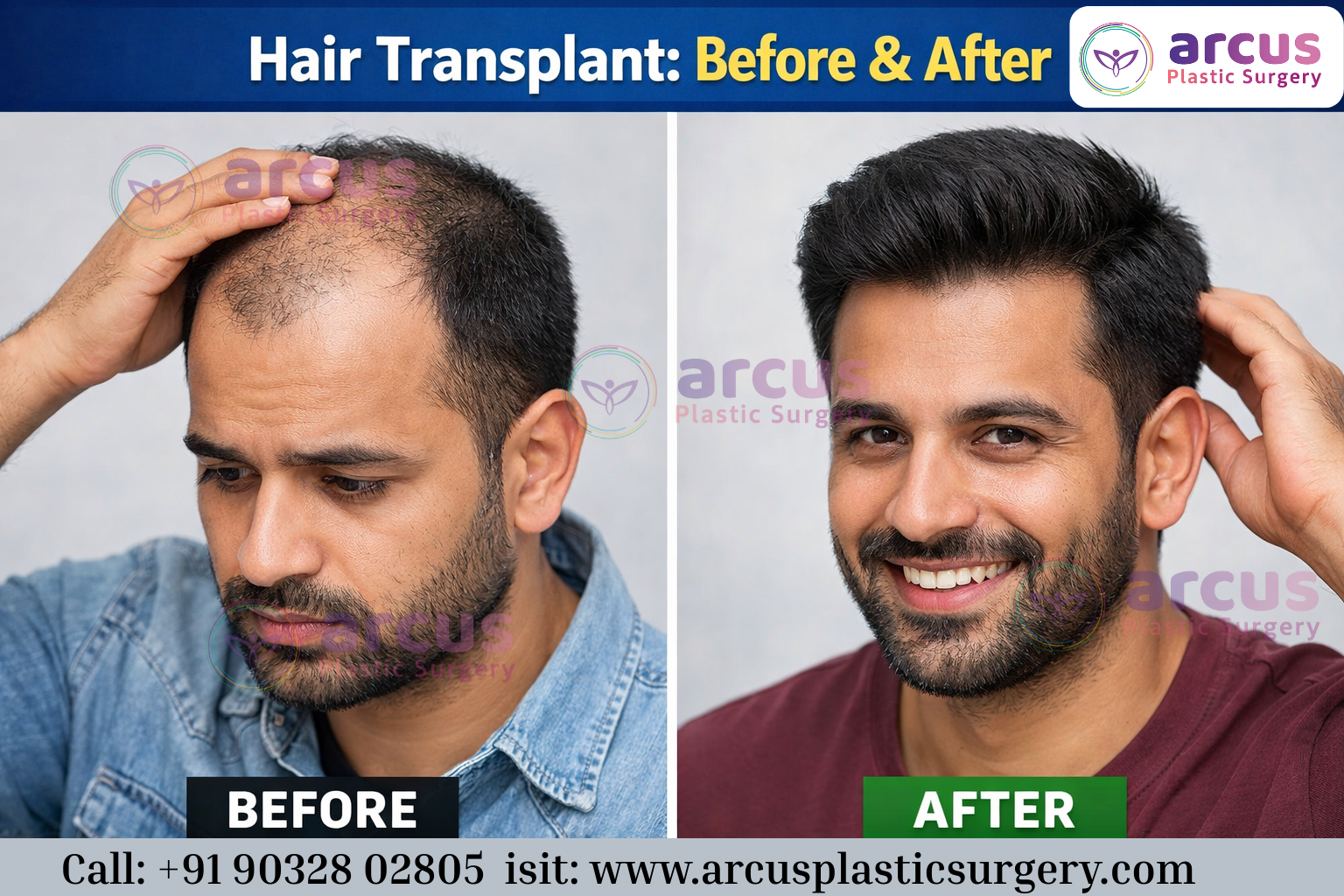
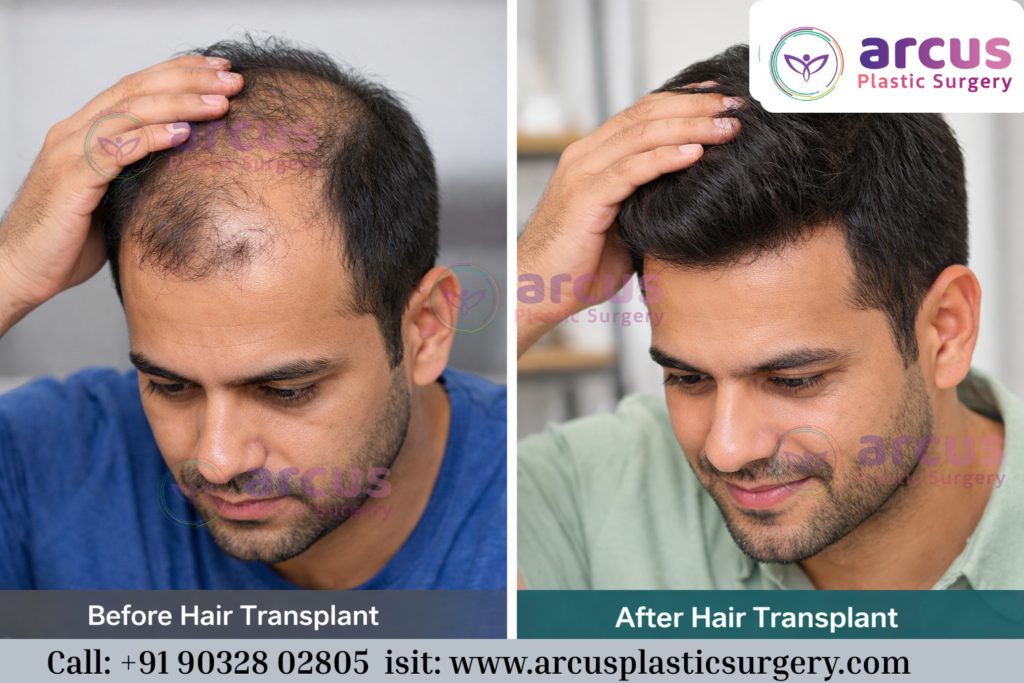
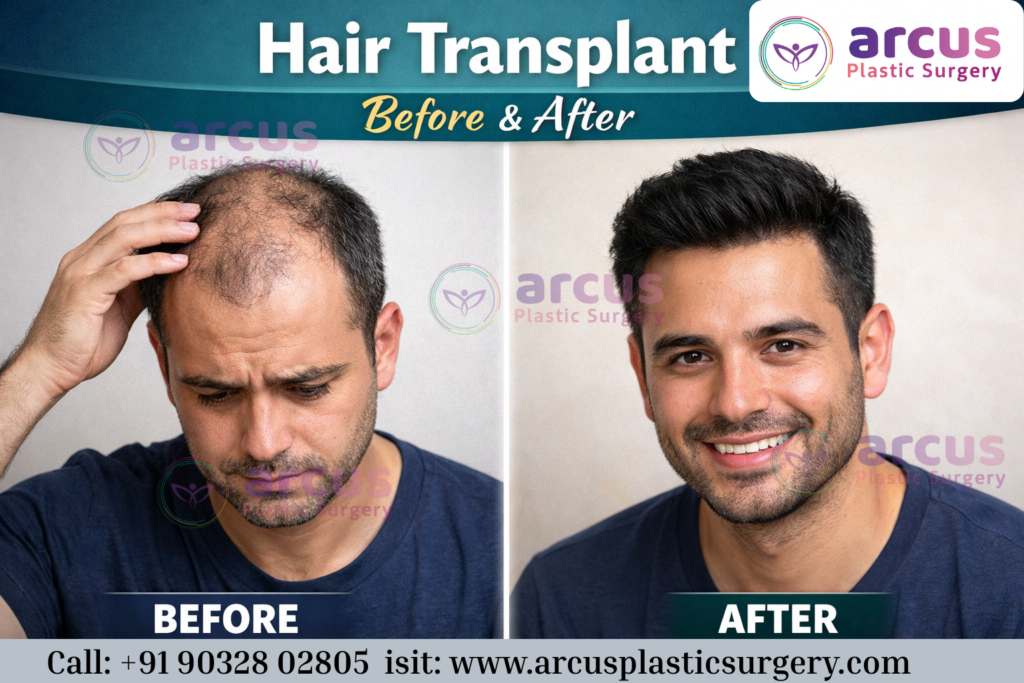
A hair transplant is the only scientifically proven permanent solution for hair loss caused by follicle miniaturization. Unlike topical products or cosmetic concealers that require daily application and provide only the illusion of density, hair transplantation addresses the actual underlying problem by permanently relocating healthy, genetically resilient follicles from the donor zone to the areas of thinning or baldness.
These transplanted follicles carry their original genetic resistance to hair loss with them. Once they establish a blood supply in their new location, they begin producing hair that grows naturally, indefinitely, and behaves exactly like the rest of your hair — because it is your hair.
FUE: The Gold Standard for Young Patients
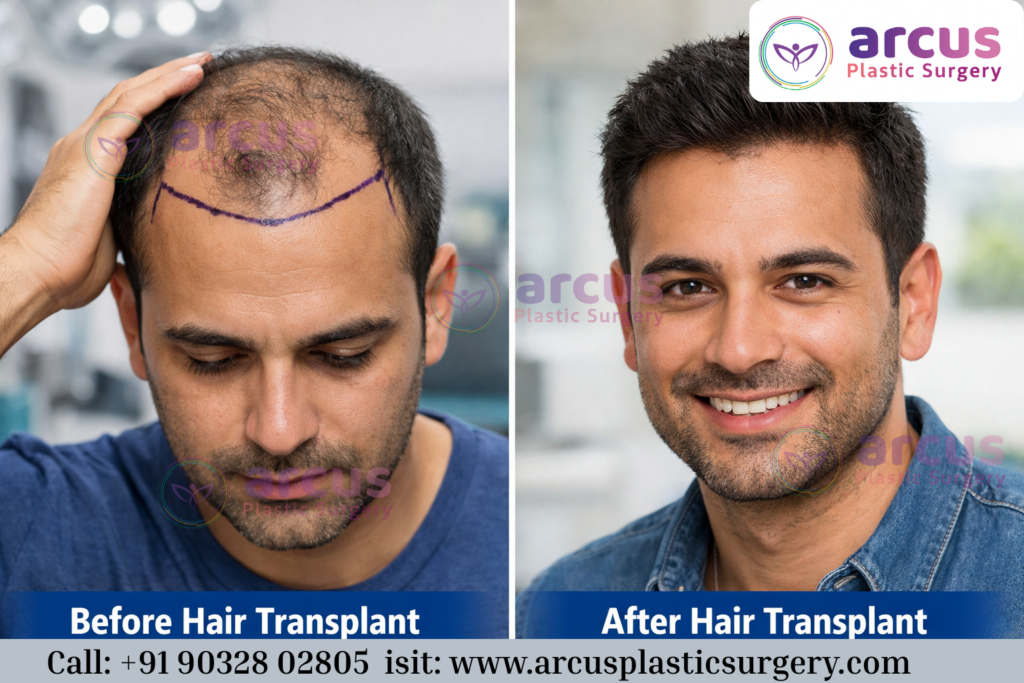
Follicular Unit Extraction, widely known as FUE, has become the preferred technique for hair transplantation — particularly among younger patients who value the minimally invasive nature of the procedure. In FUE, individual follicular units are extracted one by one from the donor area using specialized micro-punch instruments that leave only tiny dot scars invisible to the naked eye, even with short hairstyles.
Each follicle is then carefully implanted into micro-incisions made in the recipient area at precise angles and orientations designed to replicate your natural hair growth direction. The result is a hairline and density pattern that looks indistinguishable from hair that was always there.
FUT for Maximum Coverage
For patients who require a higher number of grafts in a single session — often those with more extensive hair loss — Follicular Unit Transplantation, or FUT, offers the advantage of harvesting a larger quantity of follicles efficiently. A thin strip of scalp from the donor area is removed, dissected under microscopic magnification into individual follicular units, and transplanted into the recipient areas. The resulting scar is linear and easily concealed by surrounding hair at a normal length.
What Makes Arcus Plastic Surgery the Best Hair Transplant Treatment in KPHB
Choosing where to undergo hair transplantation is one of the most important decisions you will make for your appearance and your wellbeing. At Arcus Plastic Surgery, several factors set us apart from other options in the region.
Our surgeons specialize exclusively in hair restoration and bring years of focused experience to every procedure. This specialization means we have encountered and successfully treated the full spectrum of hair loss presentations — from early-stage recession in young men to advanced crown thinning requiring dense packing techniques. We do not treat hair loss as a side service. It is our primary expertise.
Every treatment plan at our clinic is built around your individual anatomy, hair characteristics, lifestyle, and long-term goals. We use digital imaging to map your current hair loss pattern, assess your donor density, and simulate potential results, giving you a clear and realistic picture of what hair restoration can achieve for you specifically.
Our facility is equipped with the latest instrumentation for both FUE and FUT procedures, and we follow strict sterile protocols and international safety standards throughout every treatment session. From the moment you walk through our doors for your first consultation to the moment you attend your final follow-up appointment, you are in the care of a team that genuinely invests in your outcome.
The Journey: From Consultation to Full Results
Step 1 — Consultation and Assessment: Your journey begins with a thorough consultation where we listen to your concerns, examine your scalp in detail, review your medical history, and establish an honest understanding of what hair transplantation can realistically achieve for you.
Step 2 — Personalized Planning: We design your treatment plan, determining the number of grafts required, the most appropriate technique, the hairline design, and the distribution strategy for maximum natural-looking density.
Step 3 — The Procedure: Performed under local anesthesia for your complete comfort, the procedure typically takes between four and eight hours depending on the number of grafts. You remain relaxed and awake throughout, and most patients find the experience far more comfortable than they anticipated.
Step 4 — Recovery: Most patients return to their routine within two to five days. Mild tenderness and some temporary shedding of transplanted hair are completely normal parts of the healing process.
Step 5 — New Growth: Visible new hair growth emerges around the three to four month mark. By six months, the transformation is clearly underway. Full results, revealing the complete density and natural appearance of your restored hair, are typically visible by 12 to 18 months after the procedure.
Frequently Asked Questions
Q: I am only 23 years old. Am I too young for a hair transplant? A: Age alone does not determine candidacy. The key factors are the stability of your hair loss, your donor hair supply, and your overall scalp health. Our specialists assess each young patient individually and will be completely honest about whether the timing is right for transplantation or whether a monitoring and preparation approach is better suited to your situation right now.
Q: Will a hair transplant look natural on a young person? A: Absolutely — when performed by an experienced specialist who understands how to design age-appropriate hairlines. Our surgeons are trained to create hairlines that look natural at your current age and continue to look appropriate as your features mature over time.
Q: How long does transplanted hair last? A: Because the transplanted follicles are genetically resistant to the hormones that cause pattern baldness, they continue producing hair for life. The results are permanent.
Q: Is the procedure painful? A: The treatment area is numbed with local anesthesia before the procedure begins, so you will not feel pain during the surgery itself. Some mild soreness and tenderness in the days following the procedure are normal and easily managed with prescribed medications.
Q: How much does a hair transplant cost at Arcus Plastic Surgery? A: The cost varies depending on the number of grafts required and the technique used. We provide a detailed, transparent cost estimate during your consultation with no hidden charges. Various payment options are available to help make your treatment accessible.
Q: Can women undergo hair transplantation? A: Yes. Women experiencing thinning along the crown, parting line, or temples can benefit significantly from hair transplantation. The approach is customized to address female hair loss patterns specifically.
Q: Will I need more than one session? A: Some patients achieve their goals in a single session. Others with more extensive hair loss, or those who experience continued progression after their first procedure, may benefit from a second session. This is something we plan for and discuss transparently during consultation.
Q: What should I do to take care of my hair after the transplant? A: We provide detailed aftercare instructions covering washing, sleeping position, activity restrictions, and nutrition. Following these guidelines carefully during the healing period is essential for the best possible graft survival and results.
Q: Can lifestyle changes alone stop hair loss in young people? A: For some individuals with early-stage hair loss driven by reversible factors like stress or nutritional deficiency, addressing these underlying causes can meaningfully slow or temporarily halt shedding. However, hair loss caused by genetic follicle miniaturization is progressive and requires medical intervention to address effectively. A consultation with our specialist will clarify which factors are driving your hair loss and what the most effective response is.
Q: How do I get started? A: Simply reach out to Arcus Plastic Surgery to schedule your consultation. Our team will guide you through every step from your very first appointment, ensuring you feel informed, supported, and confident about your hair restoration journey.
Take Back What Is Yours
Hair loss at a young age is not something you simply have to accept. The factors driving premature hair loss in today’s world are real, but so are the solutions. At Arcus Plastic Surgery — home to the Best Hair Transplant Treatment in KPHB and the Best Hair Transplant Specialist in KPHB — we combine medical excellence with a genuine understanding of what our patients are going through to deliver results that genuinely transform lives.
You deserve to feel confident, comfortable, and fully yourself. Schedule your consultation with Arcus Plastic Surgery today and take the first step toward the hair — and the confidence — that belongs to you.