
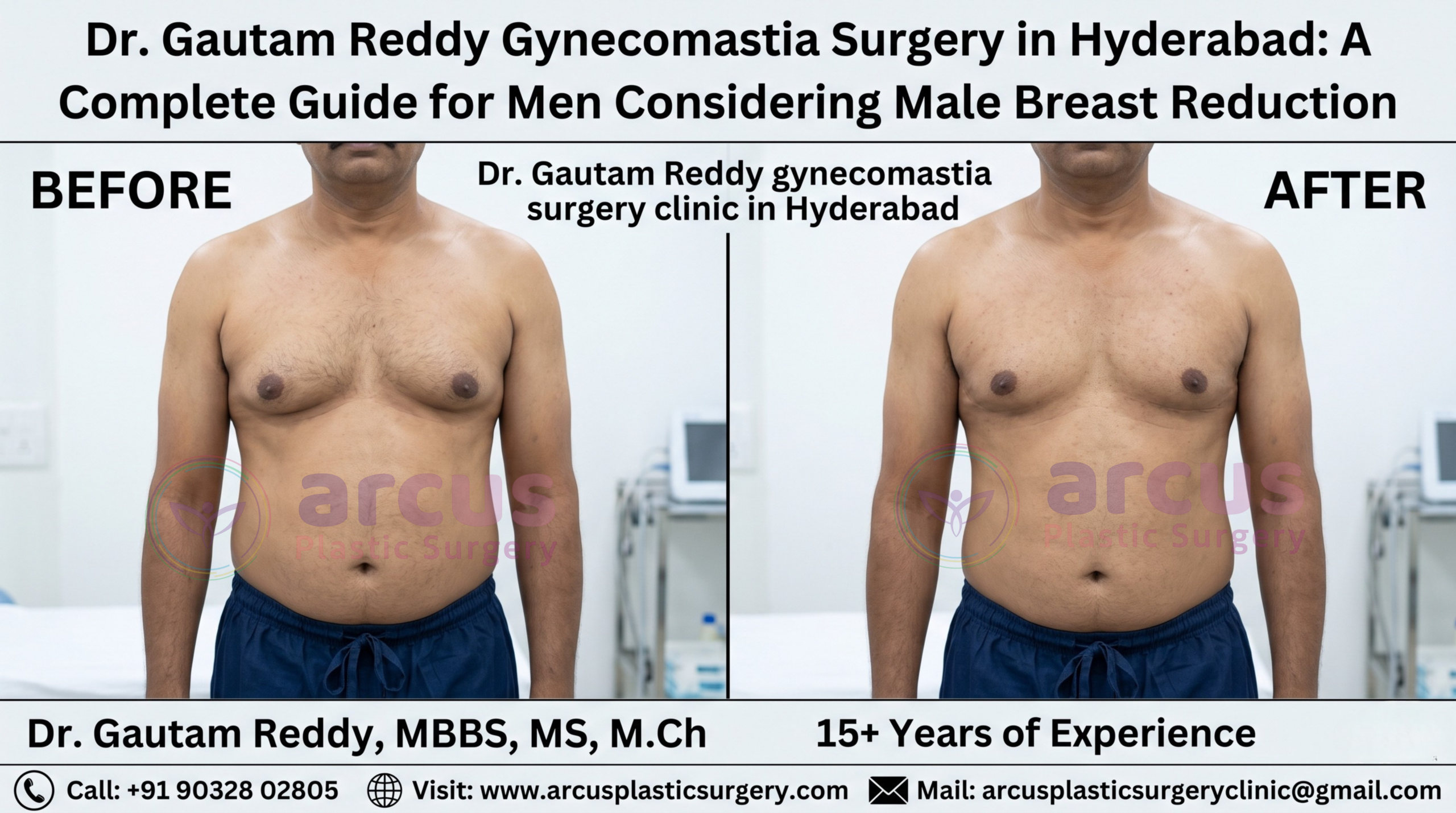
Dr Gautam Reddy Gynecomastia Surgery In HyderabadCall: 90328 02805Dr. Gautam Reddy Gynecomastia Surgery in Hyderabad: A Complete Guide for Men Considering Male Breast ReductionDr. Gautam Reddy Gynecomastia Surgery In Hyderabad has become a trusted option for men who want a flatter, more masculine chest without living with years of self-consciousness. Whether the cause is hormonal …
Dr Gautam Reddy Gynecomastia Surgery In Hyderabad
Call: 90328 02805
Dr. Gautam Reddy Gynecomastia Surgery in Hyderabad: A Complete Guide for Men Considering Male Breast Reduction
Dr. Gautam Reddy Gynecomastia Surgery In Hyderabad has become a trusted option for men who want a flatter, more masculine chest without living with years of self-consciousness. Whether the cause is hormonal imbalance, genetics, certain medications, or simply stubborn fat that won’t respond to diet and exercise, surgery remains the most reliable way to correct the condition permanently.
Dr Gautam Reddy Gynecomastia Surgery Clinic In Hyderabad
Dr. Gautam Reddy gynecomastia surgery clinic in Hyderabad focuses on giving men a straightforward, judgment-free path to treatment. A lot of patients come in nervous or embarrassed, unsure of what to expect. This guide walks you through everything — what gynecomastia actually is, why it happens, how the surgery works, what recovery looks like, what it may cost, and how to pick the right surgeon for the job.
Dealing with enlarged male breasts can be tough, both physically and emotionally. Many men avoid swimming pools, tight t-shirts, or even taking their shirt off at the gym because of it. Some have lived with it for years, quietly hoping it would go away on its own. The good news is that this condition is treatable, and more men in Hyderabad are finally talking about it openly instead of suffering in silence.
What Exactly Is Gynecomastia?
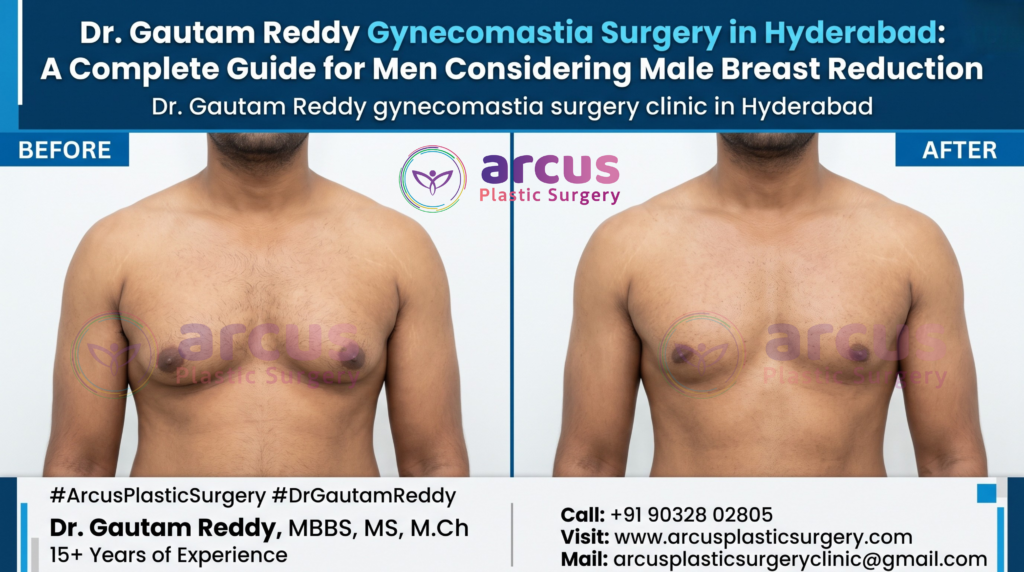
Gynecomastia is the medical term for enlarged breast tissue in men. It happens when there’s an imbalance between testosterone and estrogen in the body. It’s more common than most people realize — plenty of men experience it at some point, whether during puberty, midlife, or due to certain health conditions or medications.
Doctors generally classify gynecomastia into four grades, based on how much tissue has developed and whether there’s excess skin involved:
- Grade I: Small enlargement around the nipple, no extra skin
- Grade II: Moderate enlargement across the chest, no extra skin
- Grade III: Moderate to large enlargement with some loose skin
- Grade IV: Significant enlargement with noticeable excess skin, similar in appearance to a female breast
The grade a person falls into plays a big role in deciding which surgical approach works best, and it’s also one of the biggest factors that affects how long the surgery takes and how it’s priced.
Why Does Gynecomastia Happen?
There isn’t always one single cause, and for many men it’s a mix of factors. Some of the most common ones include:
- Hormonal imbalances (low testosterone or high estrogen)
- Genetics or family history
- Certain medications, including steroids, some blood pressure drugs, and psychiatric medications
- Obesity or significant weight gain
- Natural hormonal shifts during puberty or aging
- Underlying medical conditions affecting the liver, thyroid, or kidneys
It’s worth knowing that gynecomastia is not caused by anything the patient did wrong, and it’s not something that diet or workouts alone can usually fix once true glandular tissue has developed. This is one of the most common misunderstandings patients bring into their first consultation — many spend months trying to “chest press” the problem away before realizing it needs a different kind of solution.
Why Surgery Is Often the Only Real Fix
Once true glandular tissue has formed, no amount of chest exercises or fat-burning supplements will get rid of it. Liposuction only removes fat, not the firm glandular tissue that sits underneath. That’s why surgical correction — usually a combination of liposuction and gland excision — is considered the gold standard for lasting results.
The procedure itself is fairly quick, usually completed within one to two hours depending on severity, and is done under anesthesia so there’s little to no pain during the operation. Incisions are small, typically hidden around the areola, so scarring is minimal and fades over time.
What Happens During Male Breast Reduction Surgery
Every case is different, but here’s the general process patients can expect:
- Initial consultation – A physical exam, sometimes combined with hormone testing, to confirm the grade and cause of gynecomastia.
- Pre-surgery prep – Blood work, medical clearance, and instructions on medications to pause beforehand, such as blood thinners, aspirin, or certain herbal supplements.
- The surgery – A combination of liposuction (to remove excess fat) and excision (to remove glandular tissue), chosen based on the grade and the patient’s specific anatomy.
- Recovery room monitoring – Most procedures are done as day-care surgeries or with a short overnight stay, depending on the extent of the correction.
- Compression garment – Worn for a few weeks to support healing, reduce swelling, and help the skin settle into its new contour.
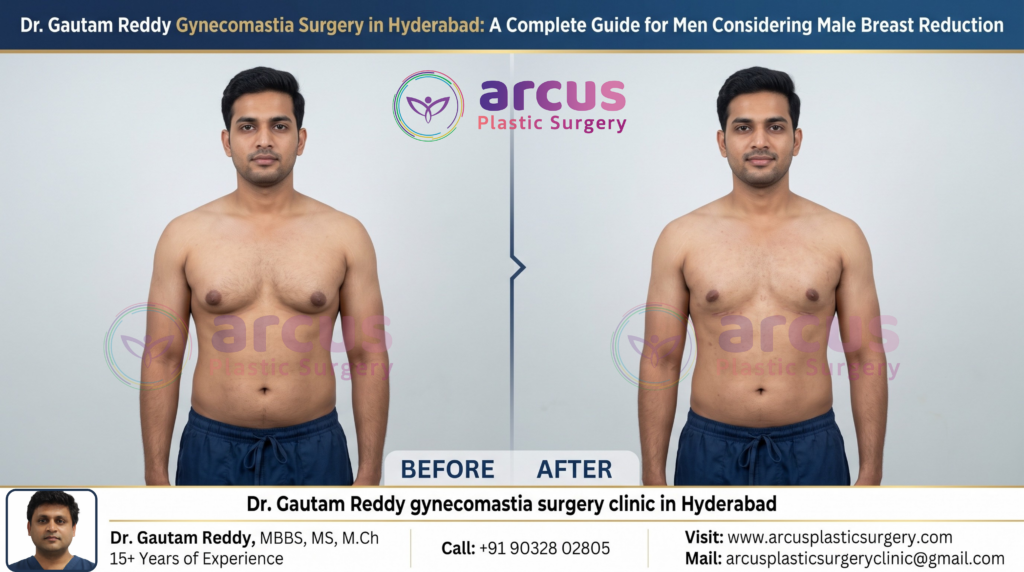
Surgeons typically choose between two main techniques. Minimally invasive correction removes only excess fat through a small incision near the areola, often paired with liposuction, and works well for fat-dominant cases. A more involved two-stage approach is used for cases with more glandular tissue — liposuction is performed first, followed by excision of the gland, nipple repositioning if needed, and skin tightening where excess skin is present.
Recovery Timeline: What to Expect Week by Week
Recovery is usually smoother than people expect. Here’s a rough breakdown:
- Days 1–3: Mild swelling, tightness, and some soreness around the chest.
- Days 4–7: Swelling starts reducing; most people return to desk jobs within a week.
- Week 2–3: Light physical activity and short walks are usually fine, along with resuming normal daily routines.
- Week 4 and beyond: Most patients can resume gym workouts and more intense activity, though it’s always best to follow the surgeon’s specific advice rather than a generic timeline.
Full results usually become visible once the residual swelling settles, which can take a couple of months, though the flatter contour is noticeable almost immediately after the compression phase ends.
What Affects the Cost of Gynecomastia Surgery
Pricing isn’t one-size-fits-all, and patients researching Dr. Gautam Reddy gynecomastia surgery Clinic in Hyderabad options should know that a genuine quote only comes after a physical evaluation. Several factors typically influence the final cost:
- Grade of the condition – Higher grades with more tissue or skin involvement require more surgical work.
- Technique used – A straightforward liposuction-only case is generally simpler than a combined excision and skin-tightening procedure.
- Surgeon’s experience – A more experienced surgeon may charge differently based on skill and outcomes, not just operating time.
- Pre-surgical diagnostics – Blood tests, hormone panels, and medical clearance can add to the overall package.
- Hospital or facility charges – Room type, anesthesia, and admission costs vary by location and setup.
- Post-op care – Compression garments, follow-up visits, and medication are usually part of the total plan.
Any number quoted without an in-person assessment should be treated as a rough estimate rather than a final figure. A proper consultation is the only way to get pricing that reflects an individual’s actual case.
What Makes a Good Gynecomastia Surgeon
Not every cosmetic surgeon has the same level of hands-on experience with male chest contouring. When researching a surgeon, patients should look at:
- Board certification and specialized training in plastic and reconstructive surgery
- A strong track record specifically with gynecomastia cases, not just general cosmetic work
- Before-and-after photos of real patients at similar grades
- Clear, honest communication about what results are realistic for a specific case
- Transparent explanation of the surgical plan before quoting any pricing
Dr. Gautam Reddy gynecomastia surgery Clinic in Hyderabad is built around this kind of transparency. Rather than pushing a one-size-fits-all package, the approach centers on a proper physical evaluation first, so the surgical plan actually matches the patient’s specific grade and goals.
Where to Find the Clinic
Arcus Plastic Surgery is located in the Kukatpally and Miyapur area of Hyderabad, making it accessible for patients coming from nearby neighborhoods like Gachibowli, Jubilee Hills, and Banjara Hills as well. The clinic handles a wide range of cosmetic and reconstructive procedures, with gynecomastia correction being one of the more frequently requested treatments among male patients.
Beyond male breast reduction, the clinic’s scope covers procedures like liposuction, tummy tuck, rhinoplasty, and reconstructive surgery, so patients dealing with more than one concern can often have a single, coordinated consultation instead of bouncing between different providers.
Is Gynecomastia Surgery Safe?
Yes, when performed by an experienced surgeon, gynecomastia surgery is considered a safe, well-established procedure. As with any surgery, there are minor risks like temporary swelling, bruising, or slight asymmetry, but serious complications are rare. Choosing a qualified plastic surgeon and following pre- and post-op instructions closely goes a long way in keeping the process smooth.
Will Gynecomastia Come Back After Surgery?
Once glandular tissue is surgically removed, results are generally permanent. That said, significant weight gain, steroid use, or certain medical conditions later in life can occasionally lead to some regrowth, which is why maintaining a stable weight and healthy lifestyle afterward matters.
Frequently Asked Questions
1. At what age can someone get gynecomastia surgery? Surgeons typically recommend waiting until after puberty, usually around 18, since some cases resolve naturally as hormone levels stabilize. Younger patients with an underlying medical cause may be considered earlier after proper evaluation.
2. Is the surgery painful? Since it’s done under anesthesia, there’s no pain during the procedure itself. Mild soreness and tightness afterward are normal and manageable with prescribed medication.
3. How long do I need to wear the compression garment? Most patients wear it for around 3 to 6 weeks, though the exact duration depends on the surgeon’s recommendation and how the healing progresses.
4. Will there be visible scars? Incisions are small and usually placed around the edge of the areola, so scarring is minimal and fades significantly over several months.
5. How soon can I go back to work? Most patients with desk jobs return within a week. Physically demanding jobs or heavy gym sessions usually need a longer break, closer to 4 weeks.
6. Does insurance cover gynecomastia surgery? Coverage varies by insurer and depends on whether the condition is classified as medically necessary versus purely cosmetic. It’s best to check directly with the insurance provider before the procedure.
Final Thoughts
Living with gynecomastia can affect confidence far more than people expect, but it’s a highly treatable condition with a well-established surgical solution. Dr. Gautam Reddy gynecomastia surgery in Hyderabad offers men a clear, judgment-free path toward a flatter, more natural-looking chest, backed by proper evaluation rather than guesswork.
If you’ve been putting off dealing with it, the first step is simple: book a consultation, get an honest assessment of your case, and understand your options before deciding anything. Arcus Plastic Surgery in Kukatpally/Miyapur is a good place to start that conversation.