
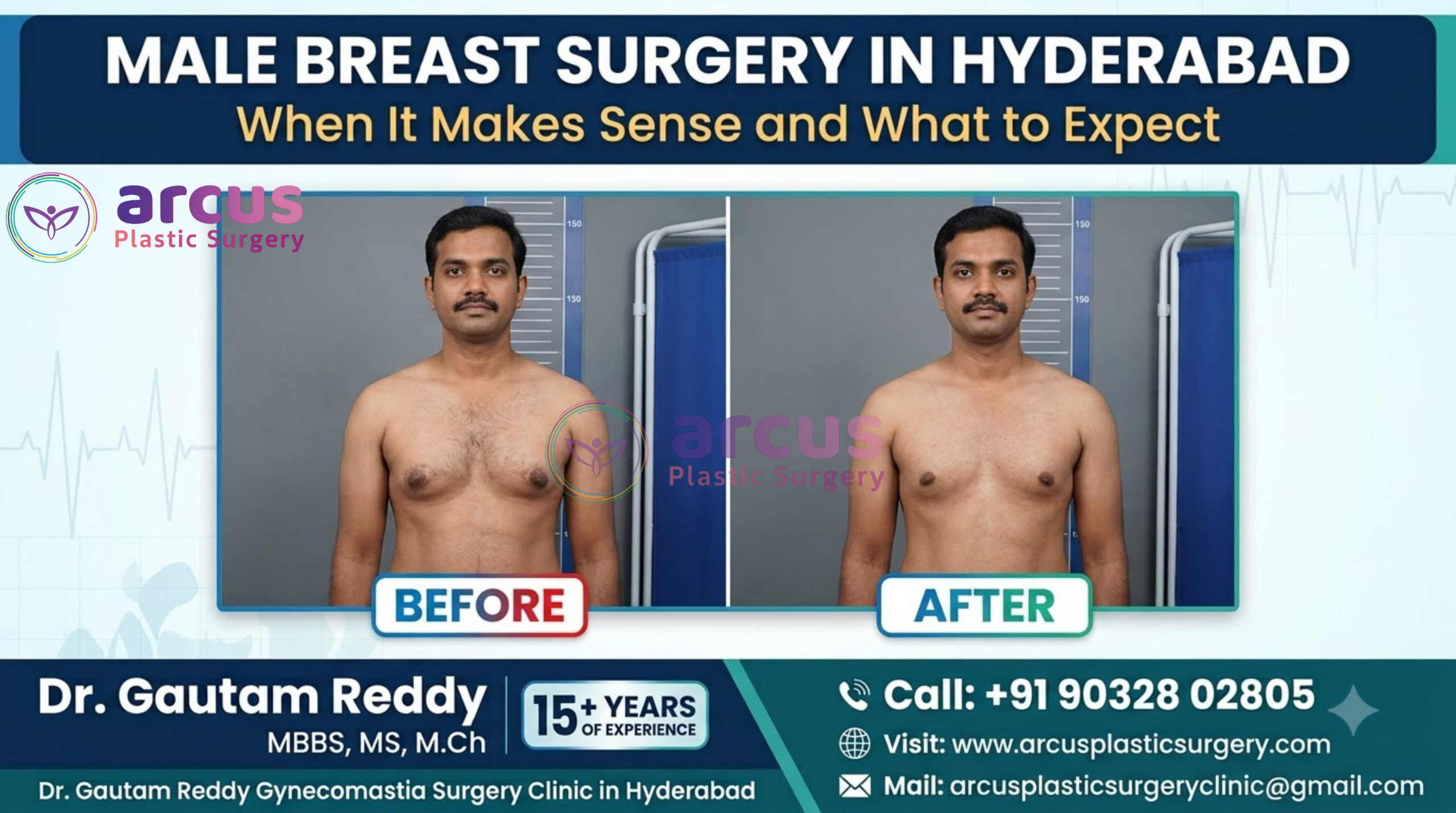
Male Breast Surgery in HyderabadMale Breast Surgery in Hyderabad: When It Makes Sense and What to ExpectCall: +91 90328 02805Male breast surgery Hyderabad is not something most men bring up with friends. You notice your chest looks fuller than you'd like. You try a few months of gym work and a cleaner diet, and the …
Male Breast Surgery in Hyderabad
Male Breast Surgery in Hyderabad: When It Makes Sense and What to Expect
Call: +91 90328 02805
Male breast surgery Hyderabad is not something most men bring up with friends. You notice your chest looks fuller than you’d like. You try a few months of gym work and a cleaner diet, and the shape barely changes. So you start searching quietly, late at night, and that is a perfectly sensible thing to do.
Gynecomastia Doctor Hyderabad
Gynecomastia doctor Hyderabad is usually the next thing men type, once they learn the medical name for what they have. Gynecomastia simply means enlarged breast tissue in men. It is common, it is not your fault, and in most cases it can be treated well. This guide explains what is going on inside your chest, how doctors tell the types apart, and what your options really look like, in plain words.
What Is Gynecomastia?
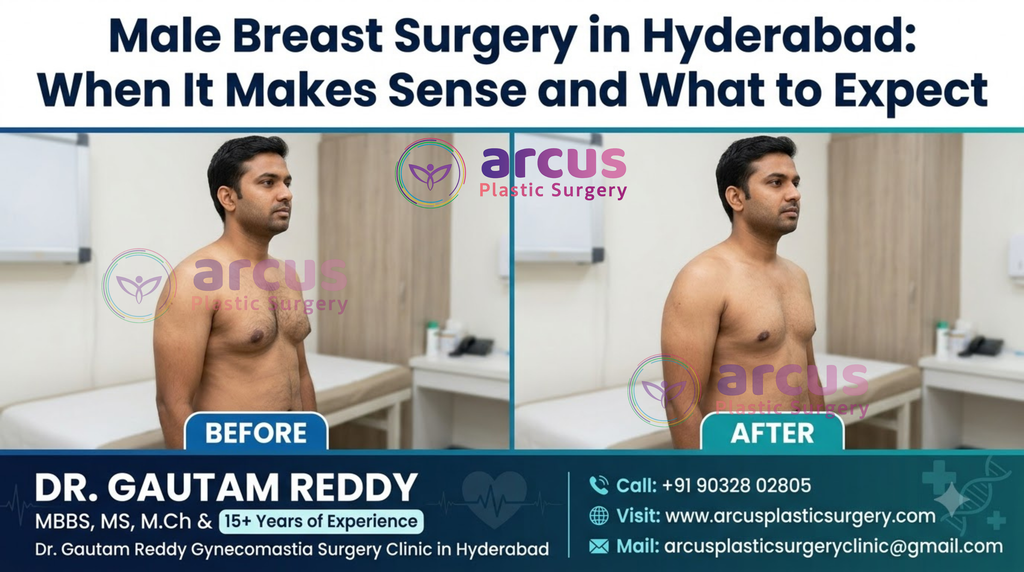
Gynecomastia is a swelling of the breast area in boys and men. It can affect one side or both, and the two sides are often uneven. Some men feel a firm, rubbery disc right under the nipple. Others notice general puffiness, a softer chest, or nipples that stand out more than before.
It is far more common than most people think. A large number of boys develop it during puberty, and many men develop it again later in life as hormones shift. Because nobody talks about it, many men believe they are the only one. They are not.
Fat or Gland: Why the Difference Matters
Not every fuller male chest is true gynecomastia. Two different things can look alike from the outside:
- Gland tissue. This is real breast tissue. It feels firm and sits behind the nipple. Exercise and weight loss do not remove it.
- Extra fat. This is soft chest fat, often linked to weight gain. It can shrink when you lose weight. Doctors call this pseudogynecomastia, which just means “false” gynecomastia.
Many men have a mix of both. A doctor needs to examine you to know the proportion, because the treatment is different for each. A man with mostly fat may do well with weight loss and liposuction. A man with firm gland needs the gland itself taken out.
How Doctors Describe the Severity
Surgeons often grade gynecomastia from mild to severe so they can plan treatment:
- Mild. A small swelling limited to the area around the nipple, with no extra skin.
- Moderate. Larger swelling that spreads across more of the chest, still with good skin tightness.
- Marked. Larger swelling with some extra, loose skin.
- Severe. A chest that looks like a female breast, with a lot of loose skin and a lowered fold under the chest.
You do not need to memorise these. The point is that a small problem and a large one need different operations, and a good doctor will tell you which group you fall into.
Why Does It Happen?
Gynecomastia usually comes from a change in the balance between male and female hormones. Every man produces both. When the balance tips even a little, breast tissue can grow. Common triggers include:
- Puberty, when hormones are changing fast
- Getting older, as testosterone slowly drops
- Being overweight, because body fat makes extra estrogen
- Certain medicines, including some used for heart, stomach or prostate problems
- Anabolic steroids and some bodybuilding supplements
- Heavy alcohol use or regular marijuana use
- Some liver, kidney, thyroid or testicular conditions
Sometimes no clear cause is found. That is common and does not mean anything is wrong with you.
Gynecomastia at Different Ages
Newborns. Some babies are born with small breast buds because of their mother’s hormones. These fade within weeks.
Teenagers. This is the most common time. Hormones swing quickly, and many boys develop swelling that settles by itself within one to two years.
Adult men. If swelling appears or stays through the twenties and thirties, it is more likely to be permanent, particularly if gland tissue is present.
Older men. Falling testosterone, weight gain and medicines are common causes. A doctor will usually want to check for medicine effects and other health issues.
When Should You See a Doctor?
You do not need to wait for pain. If your chest shape bothers you, that is reason enough to get checked. But book a visit soon if you notice:
- A hard, fixed lump, especially on one side only
- Skin changes or dimpling on the chest
- Fluid or blood coming from a nipple
- Pain or tenderness that does not settle
- Fast changes over a few weeks
Breast cancer in men is rare, but a proper examination is the only way to rule it out. Most lumps turn out to be gynecomastia.
What Happens at the First Visit
A good gynecomastia doctor will start by listening. Expect questions about when the swelling began, any medicines or supplements you take, your drinking and exercise habits, and your general health. Then comes a gentle chest examination, often with you sitting and then lying down.
Sometimes your doctor will ask for blood tests to check hormones, liver, kidney and thyroid. An ultrasound may be advised if a lump needs a closer look. Most men leave the first visit with a clear picture of what they have and what their choices are.
Your Treatment Options
Wait and watch. In teenagers and in men whose swelling started recently, waiting is often the right call. Many cases settle without any treatment.
Fix the cause. If a medicine, supplement or habit is behind it, your doctor may adjust or stop it. Never stop a prescribed medicine without medical advice.
Medicines. In certain cases, hormone-related medicines are tried early on. They work best when swelling is recent and tender, and they are not a reliable fix for long-standing gland tissue.
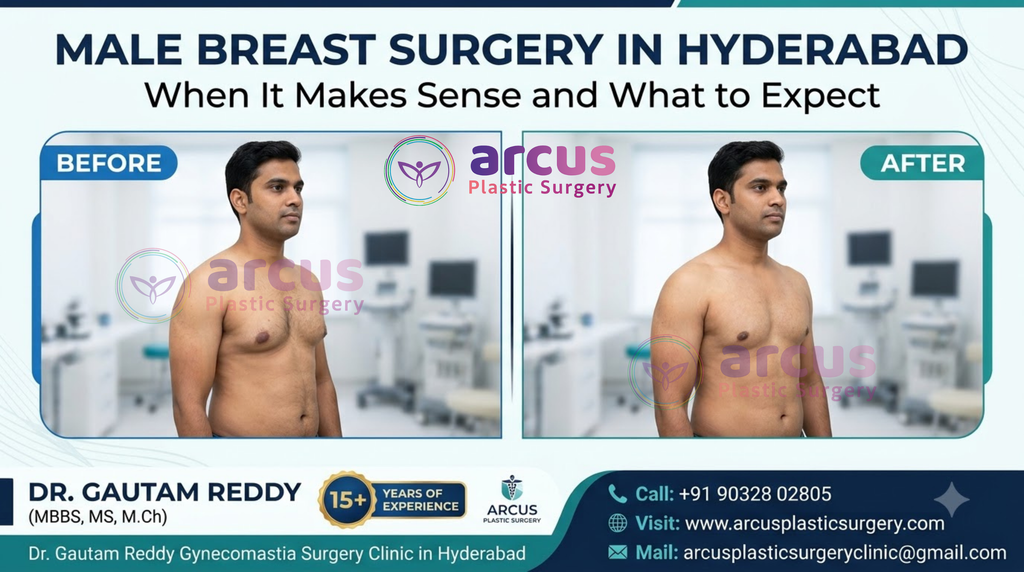
Surgery. When firm tissue has been there for a year or more, it rarely goes away by itself. Surgery is the dependable way to flatten the chest.
What Male Breast Surgery Involves
The plan depends on what your chest is made of.
- Liposuction removes extra fat through tiny cuts, each often only a few millimetres long.
- Gland removal takes out the firm breast tissue, usually through a small cut at the lower edge of the areola. The scar fades and sits where the skin changes colour, so it is hard to spot.
- Skin removal is needed only in larger cases with loose skin. It leaves a longer scar, and your surgeon should explain this before you agree.
Most men need a combination of the first two. The operation typically takes one to two hours, depending on the case, and many men go home the same day.
Anaesthesia: What to Expect
Depending on how much work is planned, surgery may be done under general anaesthesia (you are fully asleep) or under local anaesthesia with sedation (the area is numb and you are drowsy). Your surgeon and anaesthetist will pick what is safest for you. You will be told when to stop eating and drinking before the operation, and it is important to follow that exactly.
Recovery: A Realistic Picture
- First few days: Soreness, bruising and swelling are normal. Simple pain medicine usually keeps you comfortable.
- Compression vest: You will wear it for a few weeks. It reduces swelling and helps the skin settle against the new shape.
- Work: Desk work is possible within about a week for most men.
- Exercise: Heavy lifting and chest workouts usually wait three to four weeks, or longer if your surgeon advises.
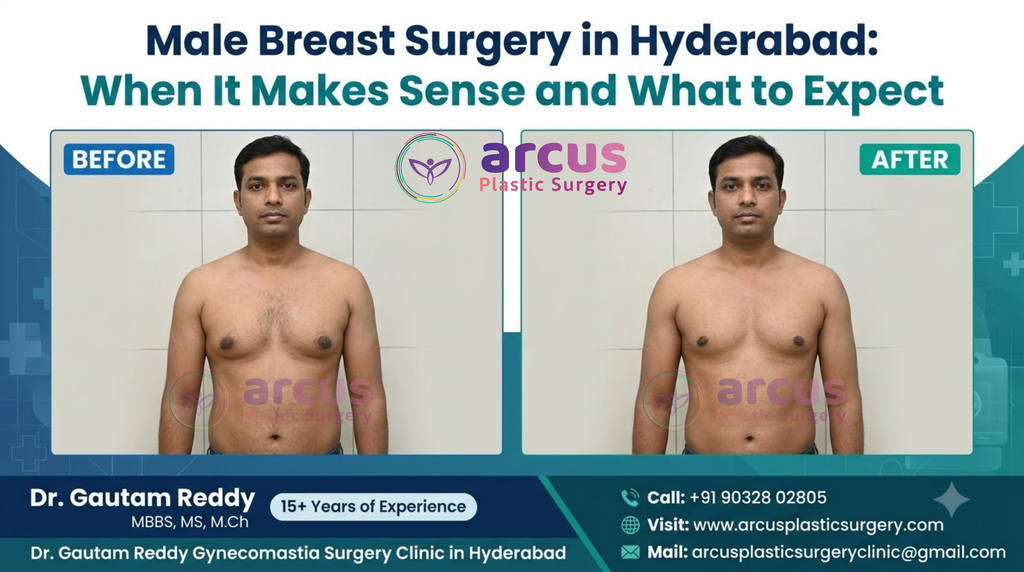
- Final shape: Swelling keeps improving for a few months, so the true result appears slowly.
Possible Risks
Every surgery carries risks. For this one they include bleeding or a fluid collection under the skin, infection, an uneven chest contour, changes in nipple feeling, visible scars, and occasionally the need for a small touch-up. These are not common when the surgery is carefully planned and performed, and your surgeon should explain each of them before you make a decision.
The Emotional Side
Gynecomastia is not just a physical issue. Many men avoid swimming, wear loose or layered clothes year round, and feel self-conscious in photos or around partners. Wanting to treat the problem for that reason is completely valid. You do not need to be in pain to deserve a solution.
Care at Arcus Plastic Surgery
Arcus Plastic Surgery is in Kukatpally, opposite Ankura Hospital on the JNTU–HiTech City Main Road. Dr. Gautam Reddy, a plastic, cosmetic and reconstructive surgeon, sees men with gynecomastia in private, unhurried consultations. He explains whether your chest is mostly fat, gland or both, and what each choice involves, before any decision is made. For anyone looking into male breast surgery Hyderabad has to offer, that kind of clear first conversation is a good place to start.
Frequently Asked Questions
Is gynecomastia dangerous?
No. It is almost always harmless, but a new hard lump should always be checked by a doctor.
Will it go away without surgery?
In teenagers it often does. In adults, long-standing gland tissue usually stays.
Can exercise get rid of it?
Exercise helps with chest fat but cannot remove gland tissue.
Is the surgery painful?
You are asleep or numb during the operation. Afterwards, soreness is usually controlled with simple pain medicine.
How long before I see the result?
You will notice a flatter chest soon after surgery, with the final result settling over a few months.
Can I have surgery if only one side is affected?
Yes. Many men have one side larger than the other, and surgery can be planned to even things out.
Final Thoughts
Having an enlarged chest does not say anything bad about you. It is a common medical condition with a reliable fix. If it has been on your mind, a private consultation is the simplest way to get real answers and decide what, if anything, you want to do.