
Post Burn Contracture Treatment Clinic in Hyderabad: Restoring Function and Confidence After Burn InjuriesBurn injuries leave lasting impacts that extend far beyond initial pain and trauma. While the physical wounds may heal, the resulting contractures and deformities can severely limit movement, affect appearance, and diminish quality of life for years. Thousands of burn survivors struggle …
Post Burn Contracture Treatment Clinic in Hyderabad: Restoring Function and Confidence After Burn Injuries
Burn injuries leave lasting impacts that extend far beyond initial pain and trauma. While the physical wounds may heal, the resulting contractures and deformities can severely limit movement, affect appearance, and diminish quality of life for years. Thousands of burn survivors struggle daily with tight, restrictive scar tissue that prevents them from performing simple tasks like bending their fingers, turning their neck, or even smiling naturally. These challenges affect not just physical capabilities but also emotional wellbeing, social interactions, and professional opportunities. At Arcus Plastic Surgery, we understand the profound impact burn-related complications have on every aspect of life. Our specialized approach to treating post-burn conditions combines advanced surgical techniques with compassionate care, helping survivors reclaim their mobility, appearance, and confidence. Finding a qualified post burn contracture treatment clinic in Hyderabad represents a crucial step toward rebuilding your life after burn trauma and achieving the functional recovery you deserve.
Post Burn Deformities Treatment in Hyderabad
: Understanding Burn Contractures and Their Impact
Burn contractures develop when healing skin tightens and restricts normal movement across joints or flexible areas of the body. This tightening occurs because burn wounds heal through scar tissue formation, which lacks the elasticity of normal skin. As scars mature, they contract and pull surrounding tissues, creating rigid bands that limit motion and distort appearance. The severity depends on burn depth, location, size, and how the wound was initially managed. Without proper intervention from a specialized post burn deformities treatment in Hyderabad facility, these contractures progressively worsen, leading to permanent disability and disfigurement that profoundly affects daily living.
What Causes Post-Burn Contractures to Develop?
Contracture formation begins during the healing phase of burn injuries. When burns damage deeper skin layers, the body initiates repair through collagen production and scar tissue formation. Unlike normal skin with organized collagen fibers that allow flexibility, scar tissue contains randomly arranged, dense collagen that lacks elasticity. This rigid tissue naturally contracts as it matures, pulling on surrounding structures.
Several factors influence contracture severity. Deep second-degree and third-degree burns carry higher contracture risks because they destroy more skin layers. Burns crossing joints like elbows, knees, neck, or fingers are particularly problematic since these areas require maximum flexibility for normal function. Inadequate initial treatment, delayed wound closure, infection, and insufficient rehabilitation therapy all increase contracture likelihood and severity.
The body’s healing response, while protective, sometimes overproduces scar tissue in a condition called hypertrophic scarring. These thick, raised scars contain excessive collagen and are prone to severe contracture formation. Keloid scars, which grow beyond original wound boundaries, create even more dramatic deformities. Genetic factors, age, and wound location all influence how aggressively scars form and contract.
Children face unique challenges with burn contractures. As they grow, contracted scars don’t stretch proportionally with surrounding tissues, leading to progressively worsening deformities. A contracture that seems manageable in a young child can become severely limiting by adolescence, highlighting the importance of early intervention at a trusted post burn contracture treatment clinic in Hyderabad that specializes in pediatric burn reconstruction.
Common Types of Post-Burn Contractures and Deformities
Burn contractures manifest differently depending on their location, each presenting unique functional and aesthetic challenges. Understanding these patterns helps survivors recognize when specialized treatment becomes necessary and what improvements are achievable through reconstructive intervention.
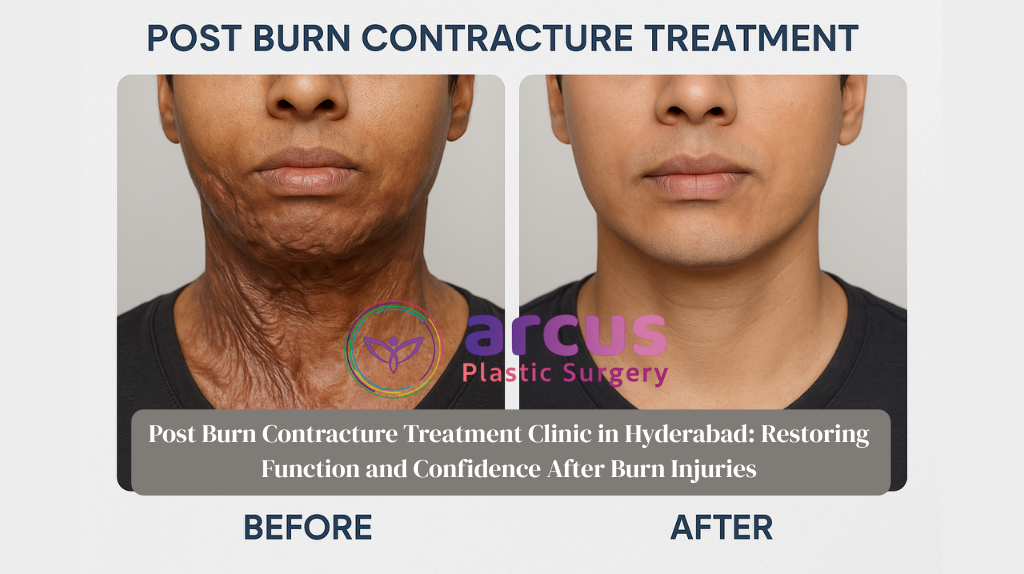
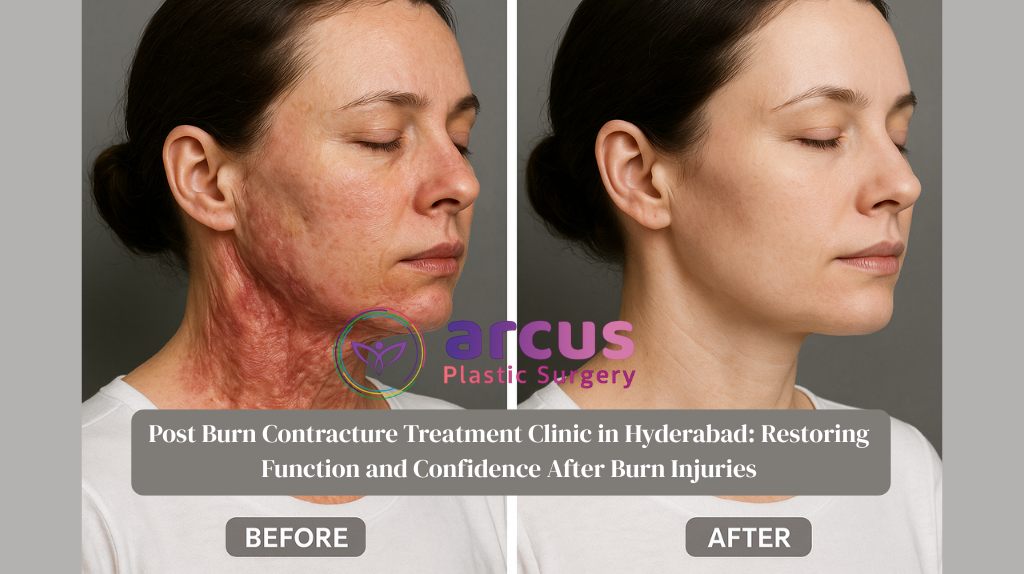
Neck contractures restrict head movement and can pull the chin down toward the chest in severe cases. This positioning affects swallowing, breathing, and social interaction since maintaining eye contact becomes difficult. The visible nature of neck deformities significantly impacts self-esteem and often causes survivors to avoid social situations. Neck contractures require sophisticated reconstruction techniques to restore both function and appearance.
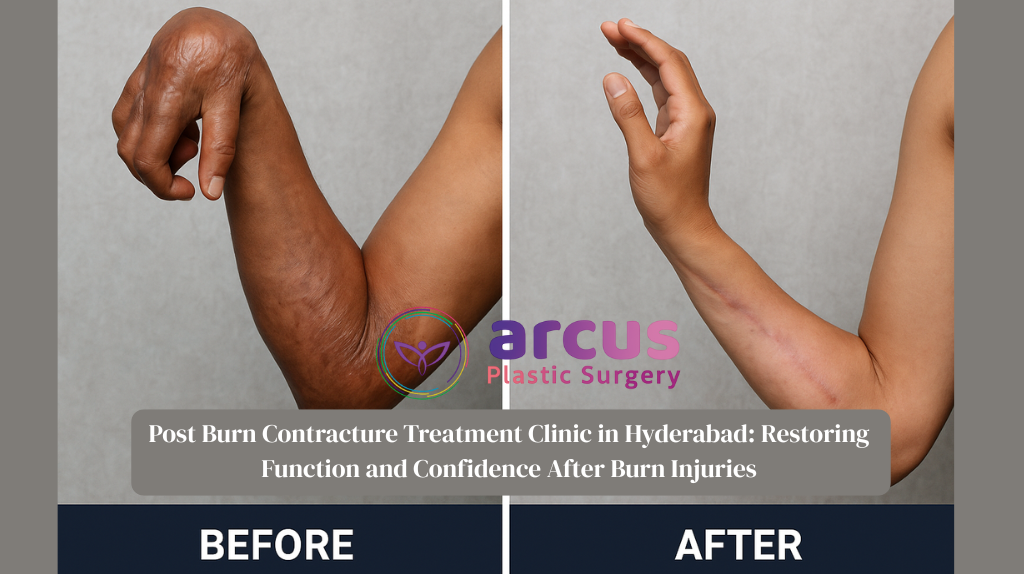
Hand and finger contractures devastate independence by limiting the ability to grasp objects, write, eat, or perform self-care tasks. Burns to the dorsal hand surface commonly pull fingers into claw-like positions, while palm burns force fingers into flexion. Thumb contractures eliminate opposition movements essential for pinching and holding. The intricate anatomy of hands demands highly specialized surgical expertise to restore meaningful function without creating new problems.
Axillary contractures, affecting the armpit region, restrict shoulder movement and prevent raising the arm away from the body. Simple activities like dressing, bathing, or reaching overhead become impossible. These contractures often extend down the chest or arm, creating web-like bands of scar tissue. Occupational limitations from axillary contractures can prevent individuals from returning to their previous employment.
Elbow and knee contractures lock joints in flexed positions, impacting walking, sitting, and arm use. Fixed joint positions cause muscle weakness and atrophy over time, compounding functional limitations. Children with these contractures may develop abnormal gait patterns or compensatory movements that create additional orthopedic problems requiring correction.
Facial contractures distort features, affect expression, and cause profound psychological distress. Mouth contractures limit opening, affecting eating and speech. Eyelid contractures prevent complete closure, risking corneal damage and vision loss. Nasal deformities impair breathing. The face represents our identity and primary means of non-verbal communication, making facial deformities particularly devastating emotionally and socially.
Surgical Reconstruction: Releasing Contractures and Restoring Function
When conservative measures prove insufficient or contractures have fully developed, surgical intervention becomes necessary to restore function and improve appearance. Modern reconstructive techniques offer remarkable results, helping survivors regain mobility and confidence. The specific approach depends on contracture location, severity, and individual patient factors.
Contracture release surgery involves cutting through or removing tight scar bands that restrict movement. Once released, the resulting defect requires coverage with healthy tissue since simply cutting scars allows them to reform during healing. This coverage comes from various sources depending on defect size and location, representing where surgical artistry and technical expertise prove essential.
Skin grafts involve transplanting skin from unburned donor sites to cover released contractures. Split-thickness grafts, containing epidermis and partial dermis, work well for large areas but may contract somewhat during healing. Full-thickness grafts, including entire dermal layer, provide better quality coverage with less contraction but are limited by donor site availability. Graft selection balances coverage needs against donor site morbidity and expected functional outcomes.
Local flaps rotate or advance adjacent tissue to cover contracture defects while maintaining blood supply through connected tissue pedicles. These flaps provide superior quality coverage compared to grafts since they bring normal, pliable skin to the contracted area. Various flap designs accommodate different defect shapes and sizes. Experienced surgeons at a specialized post burn contracture treatment clinic in Hyderabad select optimal flap designs for each unique situation.
Regional and distant flaps transfer tissue from distant body areas when local options prove inadequate. Pedicled flaps maintain original blood supply while tunneling tissue to the recipient site. Free flaps completely detach tissue, including blood vessels, and reconnect vessels at the recipient site using microsurgical techniques. These complex procedures require significant expertise but provide excellent results for challenging reconstructions.
Tissue expansion gradually stretches nearby healthy skin over weeks or months, creating extra tissue for contracture coverage. This technique places balloon-like devices under normal skin adjacent to the contracture. Regular inflation increases skin surface area without requiring distant donor sites. Though requiring multiple procedures over several months, expansion provides high-quality, well-matched tissue for reconstruction.
Z-plasty and other geometric scar revision techniques strategically reorient scar direction, breaking up linear contracture bands while lengthening the effective skin distance across joints. These elegant geometric designs improve both function and appearance through careful surgical planning and precise execution. Multiple Z-plasties can dramatically increase tissue length across contracted areas.
Facial Burn Reconstruction: Restoring Identity and Expression
Facial reconstruction addresses both functional deficits and profound psychological impacts of facial disfigurement. The face represents personal identity and serves as our primary communication tool. Reconstructing facial features requires surgical artistry combined with technical expertise to achieve natural-appearing, functional results.
Eyelid contractures preventing complete closure threaten vision through corneal exposure and drying. Reconstruction releases tight scar tissue and provides adequate skin to allow full closure without tension. Skin grafts from thin-skinned donor areas like the upper eyelid or postauricular region provide ideal tissue characteristics. Protecting vision takes priority while also addressing cosmetic concerns.
Lower eyelid ectropion, where the lid pulls away from the eye, results from cheek and lower lid contractures. This positioning causes chronic tearing, irritation, and infection risks. Reconstruction releases vertical scar bands and provides horizontal tissue lengthening through grafts or flaps. Subtle malpositions dramatically affect appearance, making precision essential for natural-looking results.
Mouth contractures restricting opening impact eating, speaking, and dental hygiene. Perioral scars create abnormal lip positioning and distort facial expressions. Reconstruction releases restrictive bands around the mouth while recontouring lips to restore normal proportions and symmetry. Careful planning ensures scars hide in natural facial creases when possible.
Nasal deformities from burn injuries include nostril stenosis, tip deformities, and nasal lining contractures affecting breathing. Nasal reconstruction represents some of the most challenging work in facial surgery given the complex three-dimensional structure and requirement for both external and internal lining. Multiple staged procedures often achieve optimal results.
Ear deformities and contractures benefit from cartilage grafting and tissue expansion or flap coverage. Total ear reconstruction for burns destroying the entire ear follows similar principles used for congenital ear absence. These multi-stage reconstructions create surprisingly natural-appearing ears that restore facial balance and allow wearing glasses or hearing aids.
Pediatric Burn Contracture Management: Special Considerations
Children present unique challenges in burn contracture treatment. Growing bodies require different approaches than adult reconstruction, and psychological considerations differ across developmental stages. Early intervention prevents deformities from worsening as children grow, but timing procedures appropriately balances surgical risks against functional needs.
Growth compounds contracture problems since scars don’t expand with surrounding tissues. A manageable contracture in a toddler becomes severely limiting by school age without intervention. However, repeated surgeries throughout childhood carry cumulative risks and psychological impacts. Careful planning determines optimal timing for each reconstructive stage.
Children tolerate some procedures better at younger ages while other operations require waiting for growth completion. Simple contracture releases with grafting can be performed early, often with excellent functional gains. Complex reconstructions involving bone, tendons, or joints may require delaying until growth plates close to avoid disturbing normal development.
Psychological preparation helps children cope with surgical experiences. Age-appropriate explanations reduce anxiety and improve cooperation with post-operative care requirements. Child life specialists, familiar with working in quality post burn deformities treatment in Hyderabad centers, help children understand procedures through play and visual aids. Parental involvement and support prove essential for successful outcomes.
School reintegration programs address the social challenges children face when returning to school after burns or reconstruction. Educating classmates about differences reduces bullying and promotes acceptance. Psychological support helps children develop resilience and positive self-image despite visible differences.
The Role of Comprehensive Scar Management Programs
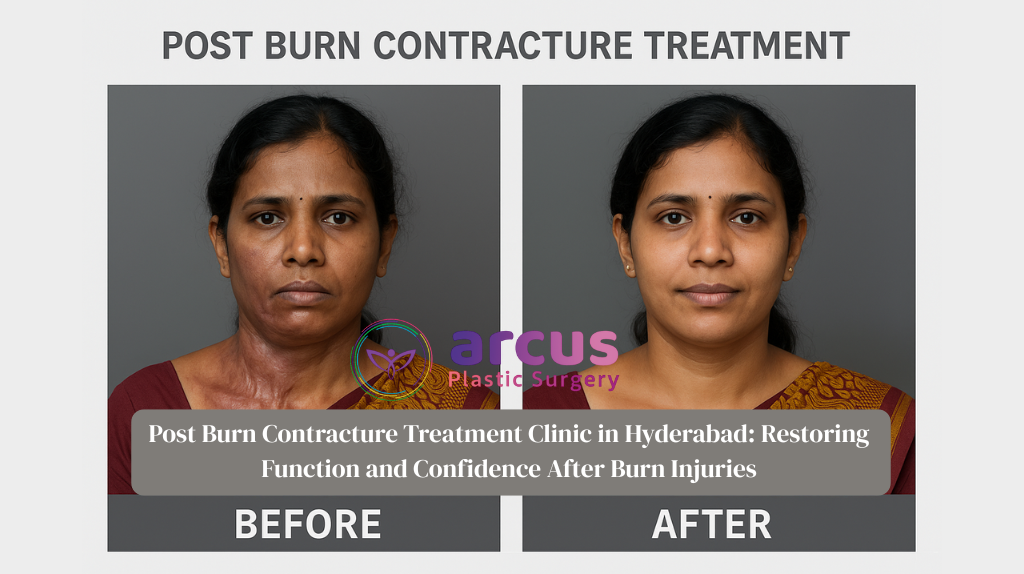
Scar management extends beyond surgical intervention to include multiple modalities that improve tissue quality and function. Comprehensive programs combine treatments addressing different aspects of problematic scarring, achieving better overall outcomes than any single intervention alone.
Laser therapy targets various scar characteristics using different wavelengths and treatment parameters. Pulsed dye lasers reduce redness and thickness in hypertrophic scars by targeting blood vessels feeding scar tissue. Fractional lasers create microscopic treatment zones that stimulate remodeling while preserving surrounding tissue for faster healing. Multiple sessions spaced over months progressively improve scar appearance and pliability.
Steroid injections reduce inflammation and collagen production in thick, hypertrophic scars and keloids. Intralesional triamcinolone remains the most commonly used agent. Repeated injections every 4-6 weeks gradually flatten raised scars. Side effects including skin thinning, pigment changes, and temporary discomfort usually remain manageable with appropriate technique and dosing.
Cryotherapy uses extreme cold to reduce scar bulk through controlled tissue destruction. Liquid nitrogen application followed by thawing cycles damages excessive scar tissue. Multiple treatments achieve progressive improvement. Cryotherapy works particularly well for keloids and resistant hypertrophic scars not responding adequately to other treatments.
Radiation therapy in carefully controlled low doses can prevent keloid recurrence after surgical excision. This controversial treatment requires balancing benefits against small cancer risks from radiation exposure. Strict protocols and appropriate patient selection minimize risks while preventing devastating keloid recurrence that would negate surgical improvement.
Why Choose Arcus Plastic Surgery for Your Burn Reconstruction
At Arcus Plastic Surgery, we’ve dedicated ourselves to helping burn survivors reclaim their lives through expert reconstructive care. Our team brings extensive experience treating all types of burn contractures and deformities, from simple releases to complex multi-stage reconstructions requiring advanced microsurgical techniques. We understand that successful outcomes require more than technical skill—they demand compassion, clear communication, and unwavering commitment to each patient’s unique goals.
Our comprehensive approach addresses physical, functional, and emotional aspects of recovery. We coordinate with therapists, psychologists, and other specialists ensuring you receive holistic care throughout your reconstruction journey. From initial consultation through final result, we provide the support and expertise you need to achieve your best possible outcome.
As a leading post burn contracture treatment clinic in Hyderabad, we’ve helped hundreds of patients overcome the limitations imposed by burn injuries. Our state-of-the-art facility offers advanced surgical capabilities while maintaining the personal attention that makes patients feel valued and heard. We invest time understanding your specific challenges and goals, developing customized treatment plans that address your priorities.
What to Expect: Your Reconstruction Journey
Understanding the reconstruction process helps you prepare mentally and practically for the commitment required. While timelines vary based on contracture severity and treatment complexity, most journeys follow similar stages from initial consultation through final recovery.
Your first consultation involves comprehensive evaluation including medical history review, physical examination, photography, and discussion of goals and concerns. We assess contracture severity, identify anatomical challenges, and develop preliminary treatment plans. This visit allows you to ask questions, understand your options, and determine if you feel comfortable proceeding with our team.
Pre-operative preparation includes medical clearance ensuring you’re healthy enough for surgery and anesthesia. Smoking cessation, medication adjustments, and sometimes nutritional optimization may be necessary. We provide detailed instructions covering what to expect, how to prepare, and arrangements needed for recovery period support.
Surgery day experiences vary by procedure complexity. Simple releases may use local anesthesia and sedation with same-day discharge, while complex reconstructions require general anesthesia and hospitalization. Our anesthesia team prioritizes your comfort and safety, using modern techniques minimizing nausea and post-operative discomfort.
Recovery timelines depend on the procedures performed but universally require patience and diligent adherence to post-operative instructions. Initial healing occupies the first two weeks, with suture removal and wound checks. Therapy usually begins within weeks, sometimes sooner for certain procedures. Full maturation takes months as scars soften and results evolve.
Follow-up care continues for months or years, monitoring healing progress and addressing any concerns. Additional procedures may be needed for optimal results, either as planned stages or to refine initial outcomes. Our commitment extends beyond surgery itself to ensuring you achieve the best possible long-term result.
Frequently Asked Questions
How long after my burn injury should I wait before considering reconstructive surgery?
Initial healing should be complete before undertaking reconstruction, typically requiring 6-12 months after injury. This allows acute inflammation to resolve and scars to mature somewhat. However, severe contractures limiting function or threatening development in children may require earlier intervention. Your surgeon assesses your specific situation to determine optimal timing balancing healing completion against urgency of functional needs.
Will reconstruction completely restore normal appearance and function?
While modern techniques achieve remarkable improvements, expectations should remain realistic. Reconstruction aims to maximize function and optimize appearance within anatomical constraints. Normal skin can’t be recreated, but tissues can be rearranged and replaced to dramatically improve outcomes. Most patients regain substantial function and see significant aesthetic enhancement, though perfection isn’t achievable. Your surgeon discusses realistic goals during consultation based on your specific condition.
How many surgeries will I need?
The number of procedures depends on contracture extent, complexity, and your goals. Simple contractures may require only one surgery, while extensive deformities need multiple staged procedures spaced over months or years. Tissue expansion, when used, requires at least two surgeries. Complex reconstructions like hand or facial work often involve multiple stages. Your surgeon provides estimated procedure numbers, though flexibility remains necessary as results from each stage guide subsequent planning.