
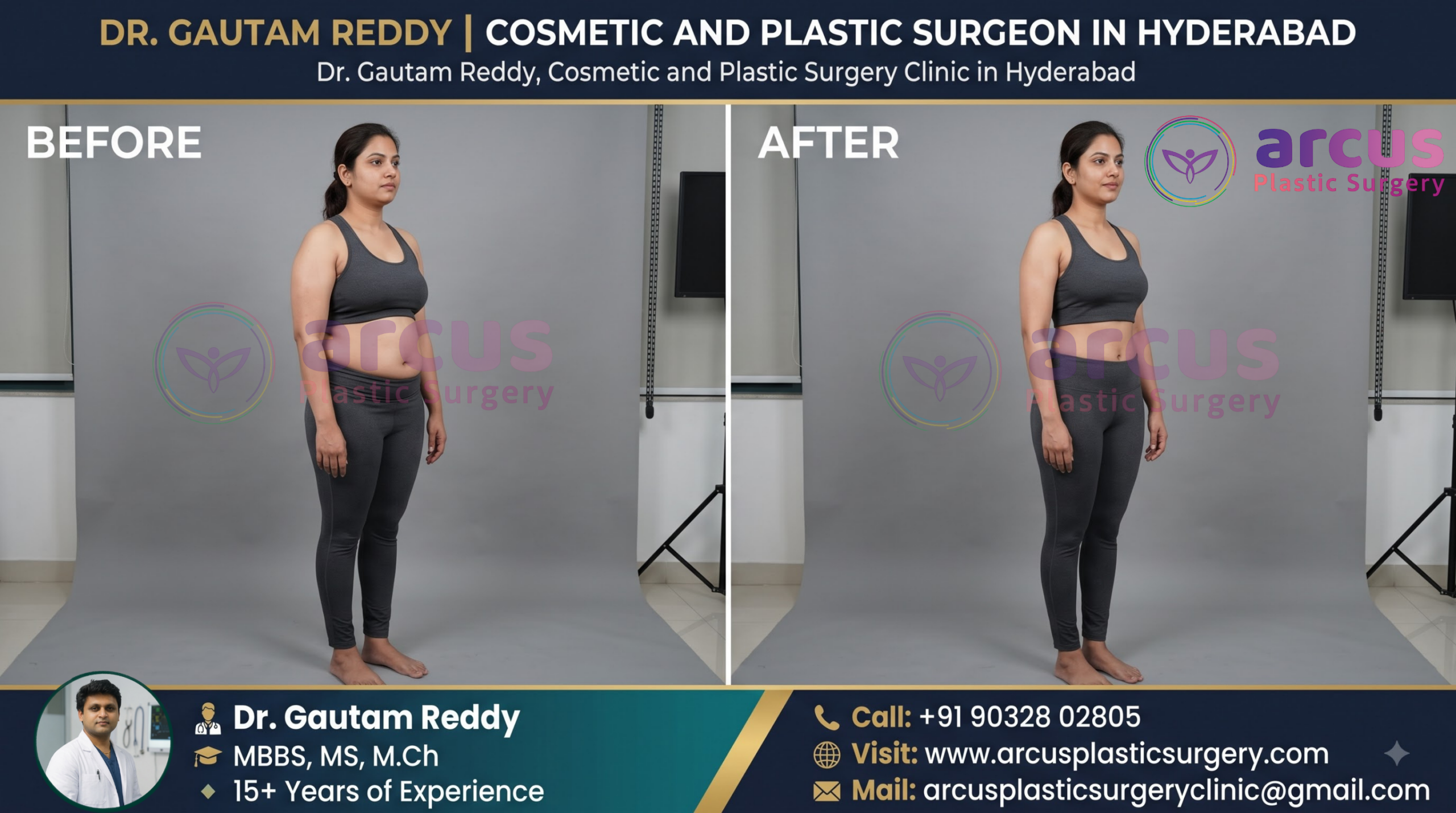
Dr Gautam Reddy Cosmetic and Plastic Surgeon in HyderabadCall: 90328 02805The words "plastic surgery" and "cosmetic surgery" are often swapped in everyday conversation, yet they describe different branches of the same field. Knowing where one ends and the other begins can make choosing a surgeon much easier.Dr. Gautam Reddy cosmetic and plastic surgeon in Hyderabad, …
Dr Gautam Reddy Cosmetic and Plastic Surgeon in Hyderabad
Call: 90328 02805
The words “plastic surgery” and “cosmetic surgery” are often swapped in everyday conversation, yet they describe different branches of the same field. Knowing where one ends and the other begins can make choosing a surgeon much easier.
Dr. Gautam Reddy cosmetic and plastic surgeon in Hyderabad, practices across both disciplines — reconstructive work that restores function after injury or illness, and cosmetic procedures aimed purely at appearance and confidence. That dual expertise isn’t common, and it reflects a broader, more rigorous surgical training than clinics that focus on cosmetic work alone.
Dr Gautam Reddy Cosmetic and Plastic Surgery Clinic in Hyderabad
For patients specifically looking into Dr. Gautam Reddy, cosmetic and plastic surgery clinic in Hyderabad, understanding this range is genuinely useful — because it tells you whether the clinic can handle your case if it turns out to be more complex than initially expected
Two Disciplines, One Surgical Foundation
Cosmetic surgery is elective. Nobody needs it medically, and people choose it to change how they look or feel. Common examples include liposuction, facial rejuvenation, and breast aesthetic procedures.
Reconstructive plastic surgery deals with problems of function and structure. It helps people whose bodies have been altered by burns, trauma, chronic disease, or congenital conditions. Releasing a burn scar that restricts movement and managing long-standing limb swelling are typical examples.
The two fields share the same underlying skills: handling tissue gently, planning incisions, understanding blood supply, and judging how the body will heal. Reconstructive cases, however, are rarely textbook. Tissue may be scarred, thin, stiff, or unpredictable, and the surgeon has to adapt while operating. A surgeon who is regularly challenged this way tends to bring greater flexibility to elective work too.
The Range of Procedures
Cosmetic Procedures
- Liposuction and body contouring: removing localized fat and refining body shape
- Facial aesthetic rejuvenation: subtle refreshing and reshaping of the face
- Cosmetic breast surgery: procedures that adjust breast size, shape, or position
- Hair transplant: restoring hair in areas of thinning or loss
Reconstructive and Medical Procedures
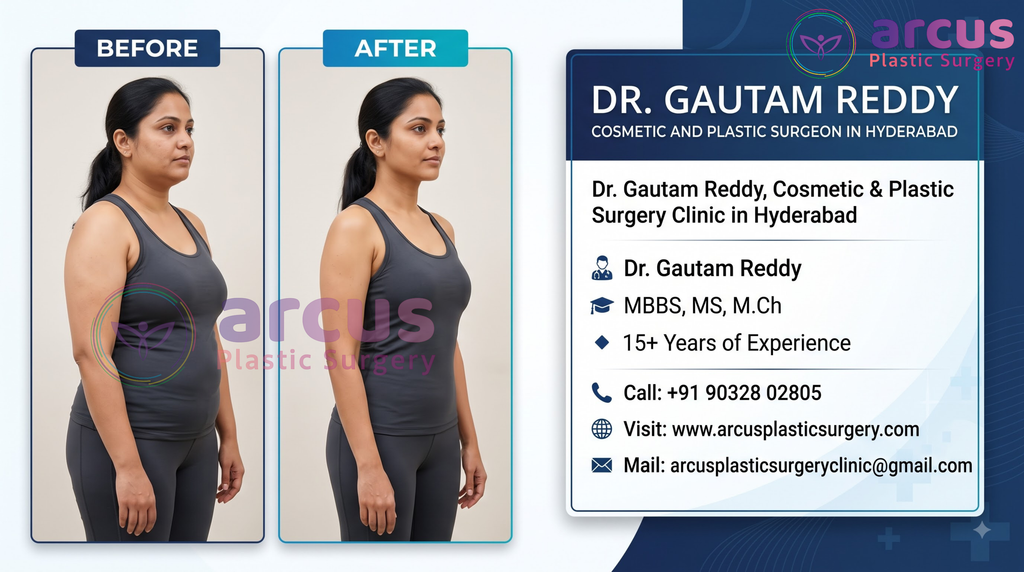
- Gynecomastia correction: treating enlarged male breast tissue
- Lymphoedema management: addressing chronic swelling caused by impaired lymphatic drainage
- Post-burn contracture treatment: restoring movement where scarring has tightened the skin
- Removal of lipomas, cysts, and other skin growths: careful excision with attention to diagnosis
- Genital rejuvenation and surgery: sensitive procedures requiring discretion and precision
This spread matters because real patients don’t always arrive with tidy, single-category problems. A “simple” lump may need diagnostic attention before removal. A chest concern may involve more than cosmetic considerations. A surgeon who works across both areas can evaluate these situations on the spot, without sending you elsewhere to start over.
How Reconstructive Experience Sharpens Cosmetic Work
Reconstruction is demanding in ways that elective surgery seldom is. Working with tissue that has been burned, scarred, or altered by disease teaches a surgeon to read how skin stretches, how it heals under tension, and how to plan around limited resources.
Those lessons carry over. A surgeon who has restored movement to a hand tightened by burn scarring understands scar behavior at a deeper level. That understanding shapes decisions in body contouring, such as where an incision sits and how tension is distributed. It also informs facial work, where healing quality is judged closely and mistakes are hard to hide.
This doesn’t mean a purely cosmetic surgeon can’t do excellent work. Many can. But when the same surgeon is comfortable in both worlds, you gain a safety margin: if your case reveals unexpected complexity, the person who began your care can usually continue it.
What a Consultation Should Involve
A consultation with a surgeon trained in both areas should feel thorough rather than hurried. Expect the following:
- A complete medical history review. Past surgeries, existing conditions, medications, allergies, and prior injuries all shape what is safe and sensible. A brief glance at your area of concern isn’t enough.
- A careful physical examination. This matters most when there’s any suggestion of underlying complexity, such as unusual swelling, scarring, or tissue changes.
- An honest classification of your case. You should hear whether your situation is straightforward or needs more specialized reconstructive attention, and why.
- A step-by-step treatment plan. You should understand what will be done, in what order, and what the alternatives are.
- Realistic timelines. These should cover both how long recovery will take and when you can expect to see the outcome.
You should also feel free to ask about risks, the possibility of further procedures, and what happens if healing doesn’t go as planned. A surgeon who welcomes those questions is usually one you can trust.
A Closer Look at Key Procedures
Gynecomastia
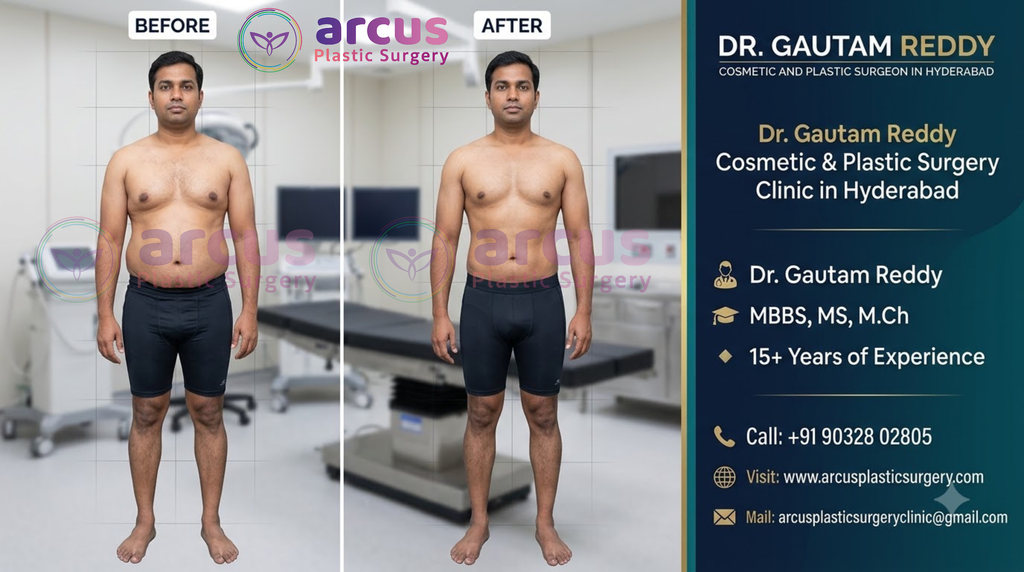
Gynecomastia is often treated as a purely cosmetic matter, but good results depend on more than removing tissue. The enlargement may be glandular, fatty, or a mix of both, and in more pronounced cases extra skin may also need attention. Precision borrowed from reconstructive practice helps create a natural, well-defined chest contour and keeps scars discreet. A proper evaluation may also consider whether any underlying cause should be looked into first.
Lymphoedema Management
Lymphoedema is a chronic condition in which fluid builds up in tissue, typically in a limb, because the lymphatic system isn’t draining properly. Over time the swelling can become heavy, uncomfortable, and prone to infection. It sits well outside the range of standard cosmetic training. Managing it, particularly in advanced stages, calls for careful assessment and surgical judgment about which approach suits the individual. Anyone dealing with persistent swelling should seek a specialist evaluation rather than assume it will resolve by itself.
Post-Burn Contracture Treatment
After a burn heals, scar tissue can tighten and shorten, limiting how a joint or body part moves. This is reconstructive surgery in its clearest form. The aim is to release the tightness, restore movement and function, and improve appearance where possible. It often takes planning, patience, and sometimes staged treatment, and the goal is practical: helping a person use their body comfortably again.
Lipoma, Cyst, and Skin Tumor Removal
Many lumps under the skin turn out to be harmless, and their removal is often uncomplicated. Even so, correct diagnosis comes first. A responsible surgeon examines the lump, considers whether further investigation is warranted, and only then plans removal. When tissue is removed, sending it for examination can be part of sensible care. Treating every lump as automatically trivial can mean missing something that needs follow-up.
Genital Rejuvenation and Surgery
This is an area where technical skill and sensitivity have to go together. Patients often feel embarrassed and may put off seeking advice for years. A private, respectful consultation is essential, as is clear discussion of the purpose of the procedure, realistic expectations, and recovery. A surgeon with broad experience across reconstructive and cosmetic work is usually well placed to handle these cases with the care they deserve.
Why This Matters When You’re Deciding
When you’re choosing a surgeon for a cosmetic concern, one question is worth asking: what happens if my case is more complicated than it looks?
Sometimes a supposedly routine issue reveals more once examined. A lump may need investigation. Scarring may be deeper than expected. Tissue quality may limit what an elective procedure can achieve. A surgeon trained only in cosmetic work might have to refer you elsewhere at that point, which can mean repeating consultations, transferring records, and losing continuity.
A surgeon trained in both cosmetic and reconstructive surgery can often assess and manage that complexity directly. Your care stays with one person who already knows your history, and that consistency can make the process smoother and less stressful.
Recovery Across Different Procedures
Recovery varies with the type of surgery, your health, and how closely you follow instructions, but some general patterns apply:
- Reconstructive procedures often involve a longer and more closely monitored recovery. Wounds, scars, and function need to be tracked as they change.
- Cosmetic procedures tend to have shorter and more predictable recovery windows, though swelling can hide the final result for weeks.
- Both categories need structured follow-up. Scheduled visits let your surgeon confirm that healing is on track and catch small concerns early.
- Your timeline should be personal. Ask for estimates specific to your procedure and circumstances rather than accepting a generic answer.
Practical preparation makes a real difference. Plan time away from work, arrange help at home if you’ll need it, and follow post-operative instructions about wound care, medication, activity limits, and any supportive garments. Avoid comparing your progress with other people’s, because healing is highly individual.
The Arcus Standard
At Arcus Plastic Surgery, Kukatpally, Hyderabad, opposite Ankura Hospital on the JNTU–HiTech City Main Road, Dr. Gautam Reddy’s practice reflects this dual training. It covers everything from routine cosmetic procedures to more involved reconstructive cases such as advanced lymphoedema and post-burn contracture repair. The range of services is more than a list. It points to surgical judgment developed across a wide variety of situations, and that judgment carries into every case, whether cosmetic or reconstructive.
For people in Hyderabad comparing their options, having medical and cosmetic expertise under one roof is particularly valuable if a case may not be entirely straightforward. The Kukatpally location is also convenient for patients across the HiTech City corridor and surrounding neighborhoods, which makes consultations and follow-ups easier to manage.
Final Word
Choosing between a cosmetic surgeon and a plastic surgeon shouldn’t force you to guess which category your problem belongs to. A surgeon trained in both can assess your situation honestly, tell you what kind of care it needs, and apply the same level of precision to elective and medically necessary work alike. Whatever you decide, take your time, ask direct questions, and choose someone who answers them plainly.
Frequently Asked Questions
1. What’s the real difference between a cosmetic surgeon and a plastic surgeon?
Cosmetic surgery is elective and focused on appearance. Reconstructive plastic surgery addresses function and appearance after injury, illness, or congenital conditions. Some surgeons practice in both areas.
2. Does reconstructive experience actually improve cosmetic surgery outcomes?
It can. Reconstructive work demands precision and adaptability when tissue is scarred or unpredictable, and those skills often translate into more refined technique in cosmetic procedures.
3. What happens if my “cosmetic” concern turns out to be more complex?
A surgeon trained in both fields can usually manage the added complexity directly, without sending you to a different specialist and restarting the process.
4. How long does recovery take for reconstructive procedures compared to cosmetic ones?
Reconstructive procedures generally involve longer, more closely monitored recovery, while cosmetic procedures tend to have shorter, more predictable timelines. Your surgeon should give you an estimate specific to your case.
5. Is genital rejuvenation surgery handled differently from other cosmetic procedures?
It calls for extra discretion and careful surgical precision, and it should always be discussed in a private, judgment-free consultation.
6. How do I know whether I need a plastic surgeon or a purely cosmetic one?
If your concern involves an injury, a medical condition, or complex tissue changes, a surgeon trained in both areas is generally the safer choice. If you’re unsure, a consultation can help clarify which category your case falls into.
7. Should I get a lump checked before having it removed?
Yes. Even lumps that look harmless should be examined first so that any that need further investigation are identified before removal.