

Best Scrotal Cysts Treatment Clinic In HyderabadCall: 90328 02805Best Scrotal Cysts Treatment Clinic in Hyderabad: Everything You Should Know Before Your First VisitIf you've been searching for the Best Scrotal Cysts Treatment Clinic In Hyderabad, you're probably somewhere between mildly worried and quietly terrified, and that's completely normal. A scrotal cyst is far more common …
Best Scrotal Cysts Treatment Clinic In Hyderabad
Call: 90328 02805
Best Scrotal Cysts Treatment Clinic in Hyderabad: Everything You Should Know Before Your First Visit
If you’ve been searching for the Best Scrotal Cysts Treatment Clinic In Hyderabad, you’re probably somewhere between mildly worried and quietly terrified, and that’s completely normal. A scrotal cyst is far more common than most men realize, and in the vast majority of cases, it’s harmless and very treatable. This blog explains what’s actually going on, when it needs attention, and what treatment really involves.
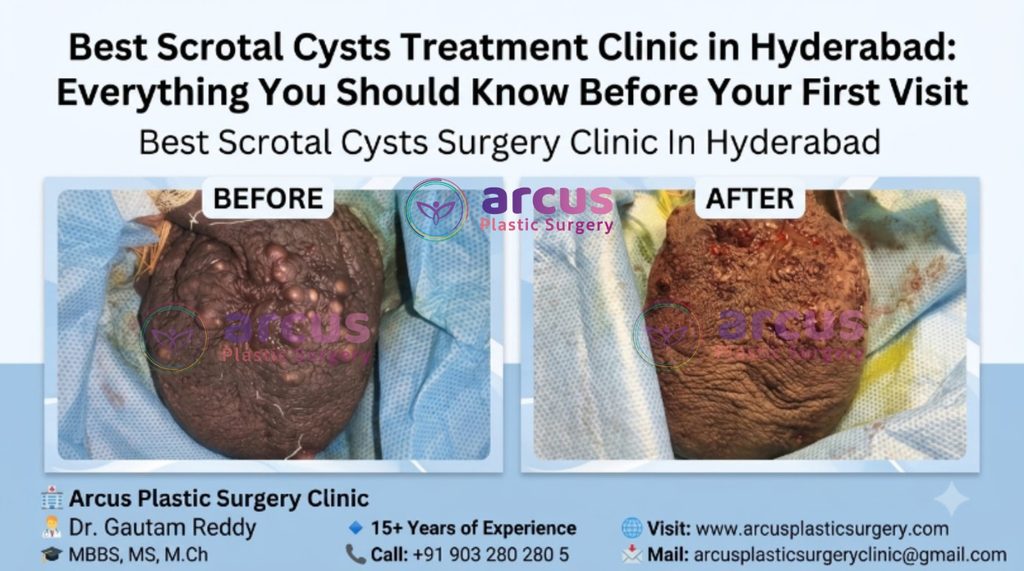
Best Scrotal Cysts Surgery Clinic In Hyderabad
Once you understand the condition, the next question is naturally about where to get it checked. Finding the best scrotal cysts surgery clinic in Hyderabad matters less for the lump itself and more for how the whole experience is handled — the privacy, the explanation, and the skill of whoever’s doing the procedure if surgery is needed at all.
What Exactly Is a Scrotal Cyst?
A scrotal cyst is a small, fluid-filled sac that forms in or around the scrotum. Most commonly, it develops in the epididymis, the coiled tube sitting behind the testicle, in which case it’s specifically called an epididymal cyst or spermatocele.
These cysts are usually:
- Smooth and round
- Painless in most cases
- Movable under the skin
- Filled with clear or slightly cloudy fluid
- Not connected to fertility issues in the vast majority of cases
They’re not tumors, and they’re not typically dangerous. But that doesn’t mean they should be ignored without a proper check.
Why Do Scrotal Cysts Form?
There’s no single dramatic cause. In many cases, doctors can’t pinpoint an exact trigger, which is frustrating but not unusual in medicine.
A few known contributors include:
- Blockage in the small tubes that carry sperm
- Minor injury or trauma to the area
- Inflammation from a past infection
- Simple age-related changes in tissue
None of these are things a man could have realistically prevented, so there’s rarely a reason to feel like it happened due to something you did wrong.
Signs You Shouldn’t Ignore
Most scrotal cysts are silent. But a few signs mean it’s time to stop Googling and book an actual appointment.
A New Lump, However Small
Even a painless lump deserves a proper look. Self-diagnosis based on internet photos is a bad idea, since several conditions can look similar on the surface.
Any Pain or Heaviness
Discomfort, dragging sensation, or aching in the scrotum, especially after standing for long periods, is worth getting checked.
Sudden Swelling
Rapid changes in size are a signal to see a doctor quickly rather than waiting it out.
Any Change in an Existing Cyst
A cyst that’s been stable for months and suddenly grows or becomes tender needs re-evaluation.
How Doctors Actually Diagnose It
Diagnosis is usually quick and far less invasive than most men expect.
- Physical examination – A doctor manually checks the lump for size, texture, and movement.
- Ultrasound scan – This confirms whether it’s fluid-filled (a cyst) or something solid that needs different investigation.
- Transillumination test – Shining a light through the scrotum; fluid-filled cysts typically let light pass through, while solid masses don’t.
- Discussion of symptoms – Any pain, changes, or family history gets factored into the decision.

This entire process is usually completed in a single visit, and it’s far less uncomfortable than the anxiety leading up to it.
Treatment Options: What Actually Happens
Not every scrotal cyst needs treatment. Genuinely, plenty of small, painless ones are simply monitored over time.
Watchful Waiting
If the cyst is small, painless, and not growing, doctors often recommend periodic checkups rather than jumping into treatment.
Aspiration
For some cysts, fluid can be drained with a fine needle. This is a simple, in-clinic procedure, though cysts can sometimes refill over time.
Surgical Removal
When a cyst is large, painful, growing, or affecting daily comfort, surgical removal is the definitive fix. This is a minor outpatient procedure in most cases, done under local or general anesthesia depending on the specifics.
Recovery is typically straightforward:
- Mild discomfort for a few days, managed with basic pain relief
- Light activity restriction for about a week
- Stitches, if used, usually dissolve or are removed within 7–10 days
- Most men return to normal routine within a week to ten days
Why the Right Clinic Makes a Real Difference
This is a sensitive area, literally and emotionally, and the clinic’s approach matters as much as the medical skill involved.
Privacy and Discretion
A good clinic handles consultations and procedures with clear confidentiality, without making the patient feel exposed or rushed.
Surgical Experience Specifically in This Area
Genital and urological minor surgery requires precision that general practice doesn’t always provide. Experience specifically with scrotal procedures matters.
Clear, Judgment-Free Communication
Men often feel awkward discussing this area. A good doctor makes the conversation feel routine and medical, not embarrassing.
Proper Aftercare Guidance
Recovery instructions should be specific and clearly communicated, not a generic printed sheet handed over on the way out.
Common Myths Worth Clearing Up
“A scrotal cyst means cancer.” In the overwhelming majority of cases, it doesn’t. Fluid-filled cysts are almost always benign, unlike solid masses, which need separate investigation.
“It will affect fertility.” Most scrotal cysts have no impact on fertility whatsoever. This fear keeps many men from seeking care sooner than they should.
“Surgery always leaves visible scarring.” Modern minor surgical technique for these procedures typically leaves minimal, well-hidden scarring.
“If it doesn’t hurt, it’s not serious.” Painless doesn’t mean harmless. Some lumps still warrant monitoring or treatment even without discomfort.
What Recovery Actually Feels Like
Most men are surprised by how manageable the recovery is. The first two to three days involve mild swelling and tenderness, easily handled with basic medication and rest. Supportive underwear during this period genuinely helps with comfort.
By the end of the first week, most patients are back to desk-based work. Physical activity, exercise, and anything strenuous usually needs to wait slightly longer, typically two to three weeks, based on the doctor’s specific advice.
Where Arcus Plastic Surgery Fits In
For men in Hyderabad looking for straightforward, discreet care, Arcus Plastic Surgery, led by Dr. Gautam Reddy in Kukatpally, opposite Ankura Hospital on the JNTU–HiTech City Main Road, handles scrotal cyst evaluation and treatment as part of its broader surgical practice.
The approach here leans toward clear explanation first: understanding whether a cyst needs monitoring, drainage, or removal, and walking the patient through exactly what each option involves before anything is decided.
Final Thoughts
A scrotal cyst sounds alarming the moment you notice it, but it’s one of the more manageable conditions a man can face. Most cases are simple, treatable, and nowhere near as serious as the late-night search results might suggest.
If you’ve found a lump and you’re unsure what it means, the right move is a proper examination, not more searching. A short consultation will usually settle the question in one visit and give you a clear next step.
Frequently Asked Questions
1. Is a scrotal cyst dangerous?
In most cases, no. Scrotal cysts are typically benign and fluid-filled, and they rarely indicate anything serious. A proper examination confirms this quickly.
2. Does a scrotal cyst always need surgery?
No. Many small, painless cysts are simply monitored over time. Surgery is usually reserved for cysts that are large, painful, or growing.
3. Will removing a scrotal cyst affect fertility?
In the vast majority of cases, no. The procedure is localized and generally doesn’t interfere with sperm production or fertility.
4. How long does recovery take after scrotal cyst surgery?
Most men return to normal daily activity within a week to ten days. Strenuous activity is usually avoided for two to three weeks.
5. Can a scrotal cyst come back after treatment?
Aspiration alone sometimes allows fluid to reaccumulate. Surgical removal is considered more definitive and has a lower recurrence rate.
6. Is the diagnosis process painful or invasive?
Not typically. A physical exam and an ultrasound scan are usually enough to confirm a diagnosis, both of which are quick and non-invasive.