
Gynecomastia Surgery Doctor HyderabadCall: 90328 02805Gynecomastia Surgery Doctor in Hyderabad: Causes, Treatment Options and What Patients Should KnowGynecomastia Surgery Doctor Hyderabad says gynecomastia is a condition in which glandular breast tissue develops in males, creating fullness around the chest or nipple area. It can affect teenagers and adults, and it may occur on one side …
Gynecomastia Surgery Doctor Hyderabad
Call: 90328 02805
Gynecomastia Surgery Doctor in Hyderabad: Causes, Treatment Options and What Patients Should Know
Gynecomastia Surgery Doctor Hyderabad says gynecomastia is a condition in which glandular breast tissue develops in males, creating fullness around the chest or nipple area. It can affect teenagers and adults, and it may occur on one side or both sides of the chest. For some men, the change is mild; for others, it becomes noticeable through shirts, during exercise, or while swimming. Although it is a common medical condition, many people hesitate to discuss it because of embarrassment or concerns about how others may react. Understanding the condition is the first step towards making an informed decision about treatment.
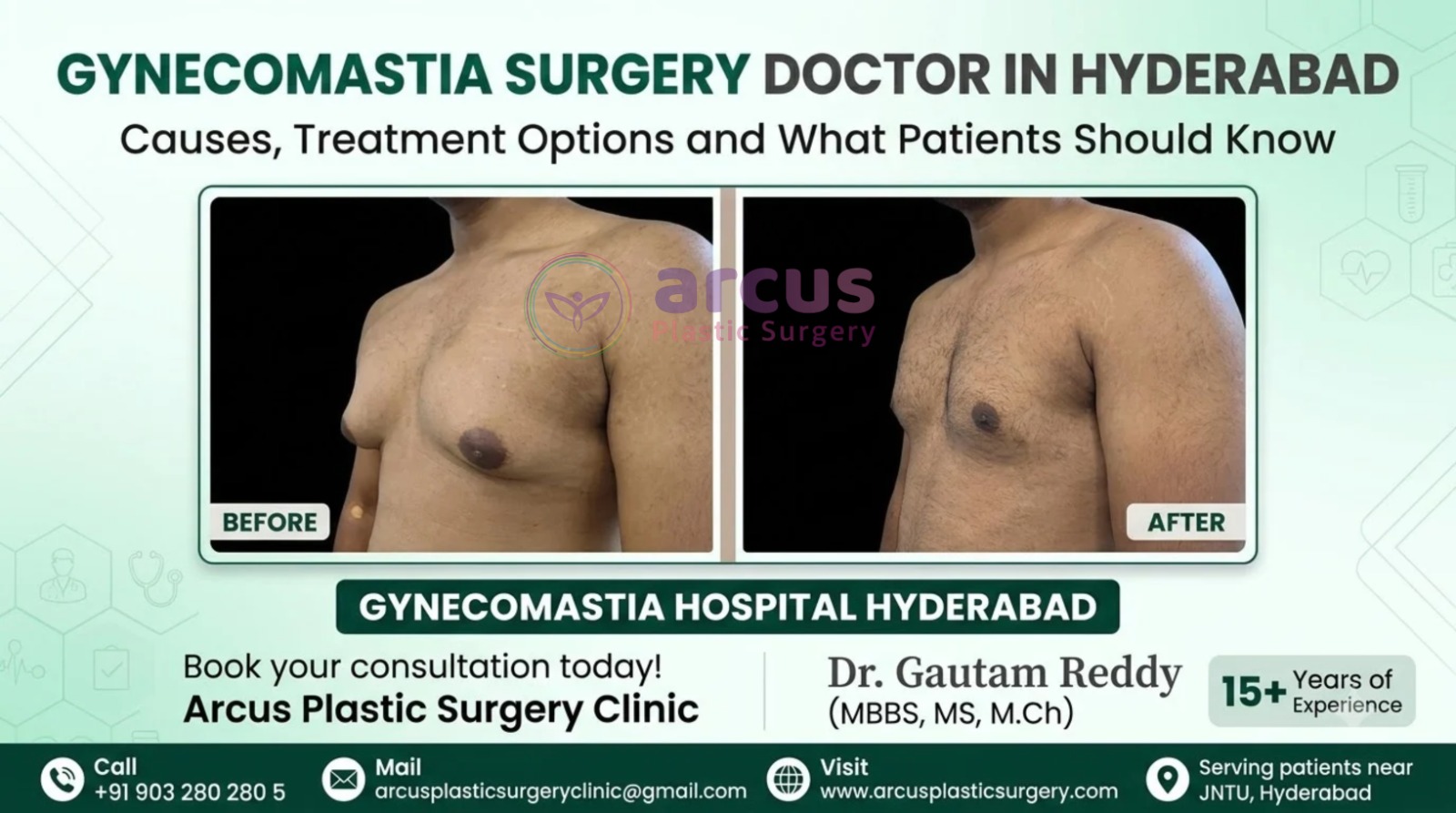
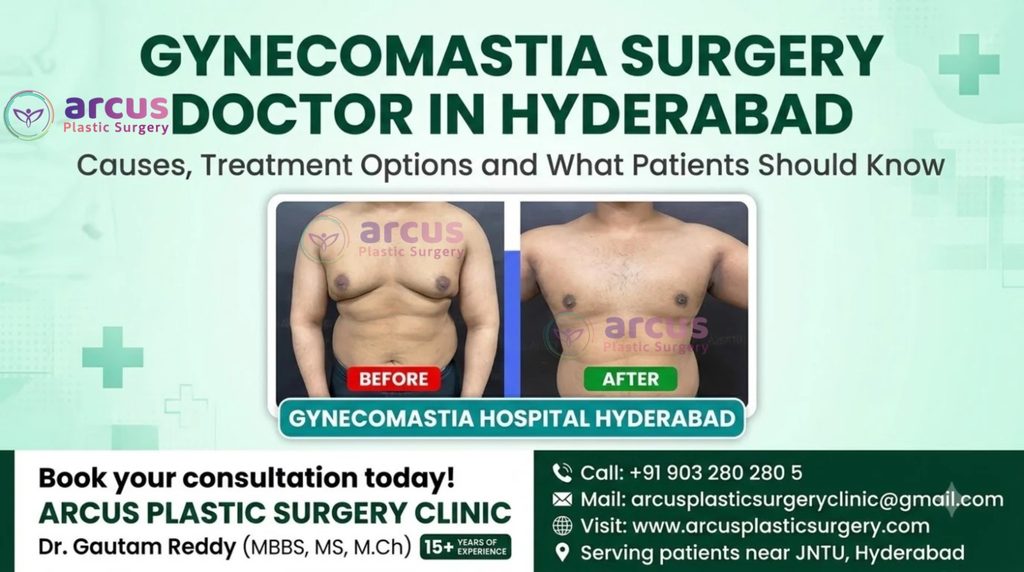
When looking for a Gynecomastia Hospital Hyderabad, patients should consider more than the appearance of before-and-after photographs. A proper consultation should establish whether the enlargement is caused by glandular tissue, excess fat, loose skin, or a combination of these factors. The doctor should also review the patient’s medical history, current medicines, general health, and expectations. Arcus Plastic Surgery in Kukatpally, Hyderabad, offers plastic surgery services under Dr. Gautam Reddy, including gynecomastia treatment. Patients can use a consultation to understand which options may be suitable for their individual condition.
What exactly is gynecomastia?
Gynecomastia refers specifically to the enlargement of male breast gland tissue. It is different from having extra fat around the chest, although both can occur together. Glandular tissue often feels firmer or rubbery beneath the nipple, while fat-related enlargement generally feels softer and may be spread more broadly across the chest. These differences are useful clues, but they are not enough to establish a diagnosis without an examination.
Gynecomastia can develop during puberty because hormone levels change naturally during adolescence. In many teenagers, the enlargement improves on its own over time. Adult men can also develop the condition due to hormonal changes, certain medications, anabolic steroid use, or underlying health problems. Sometimes, no clear cause is identified.
It is important not to assume that every enlarged male chest requires surgery. The appropriate response depends on the cause, the patient’s age, how long the condition has been present, and whether there are symptoms or other medical concerns.
What causes enlarged male breast tissue?
The development of glandular breast tissue is often associated with changes in the balance between oestrogen and androgen activity. All men have both types of hormones, although their levels and effects differ. When the balance changes, breast tissue may grow.
Possible contributing factors include:
- Puberty: Temporary hormone changes can lead to breast tissue development in adolescent boys.
- Ageing: Hormonal changes and shifts in body composition may contribute to breast enlargement in some older men.
- Medications: Certain prescription medicines can contribute to gynecomastia. Patients should discuss their medication list with a clinician rather than stopping treatment independently.
- Anabolic steroids and hormones: Non-prescribed performance-enhancing substances may affect hormone balance and contribute to breast tissue enlargement.
- Health conditions: Some liver, kidney, thyroid, or testicular conditions can be associated with gynecomastia.
- Weight gain: Increased chest fat can make the area look enlarged. Weight gain can also occur alongside glandular enlargement.
The cause matters because treating an underlying medical issue may be more appropriate than proceeding directly to surgery. A doctor may recommend further evaluation if the history or examination suggests a hormonal or other medical problem.
When should a patient seek medical advice?
A consultation is appropriate when chest enlargement persists, causes discomfort, or affects daily activities and confidence. Patients should seek prompt medical assessment if they notice a hard or fixed lump, enlargement mainly on one side, nipple discharge, skin changes, nipple retraction, or a lump in the armpit. These symptoms do not automatically indicate a serious condition, but they should not be ignored.
Adolescents with breast enlargement should receive age-appropriate medical guidance. Surgery is not usually the first step for temporary pubertal gynecomastia, and the timing of any intervention should be discussed with a qualified clinician.
What happens during a gynecomastia consultation?
A consultation generally begins with a discussion of when the enlargement started, whether it has changed, and whether there is tenderness or pain. The doctor may ask about weight changes, previous treatments, exercise habits, medications, supplements, steroid use, and relevant medical history.
A physical examination helps determine whether the enlargement appears to involve glandular tissue, fat, loose skin, or a combination. Depending on the findings, the clinician may recommend blood tests or imaging to investigate a possible underlying cause. Not every patient needs extensive testing; investigations should be guided by the clinical assessment.
Patients should feel comfortable discussing their concerns openly. A consultation is also an opportunity to ask about the expected result, possible scars, recovery restrictions, and the limits of surgery.
What treatment options are available?
Treatment depends on the cause and severity of the enlargement.
Observation and treatment of the underlying cause
When gynecomastia is associated with puberty or a reversible trigger, observation or management of that trigger may be appropriate. A clinician may review medications or investigate an underlying condition. Patients should not stop prescribed medicines without discussing alternatives with the prescribing doctor.
Liposuction
Liposuction removes excess fat through small incisions using a thin surgical tube. It may be suitable when fatty tissue is a major contributor to chest fullness. However, liposuction alone may not adequately remove firm glandular tissue directly beneath the nipple.
Glandular tissue excision
When firm gland tissue is responsible for the enlargement, surgical removal may be recommended. The incision is often placed near the edge of the areola, although the approach depends on the patient’s anatomy and the amount of tissue involved.
Combined treatment
Some patients have both excess fat and glandular tissue. A surgeon may recommend a combination of liposuction and gland excision to address both components. If there is substantial loose skin, additional skin removal may sometimes be needed.
No single method is appropriate for every patient. The surgical plan should be based on an examination rather than a generic procedure package.
How to choose a gynecomastia hospital in Hyderabad
When comparing a gynecomastia hospital Hyderabad, patients should check whether the surgeon has appropriate specialist qualifications and experience in plastic surgery. They should also understand where the procedure will be performed, who will provide anaesthesia if required, what safety arrangements are available, and how follow-up care will be managed.
Useful questions to ask include:
- What is causing my chest enlargement?
- Is further medical testing necessary before treatment?
- Would liposuction, gland removal, or a combination be appropriate?
- Where will the operation take place?
- What are the risks, and how are complications managed?
- What scars should I expect?
- How long should I avoid heavy lifting and chest exercises?
- What follow-up appointments will be needed?
Patients should be cautious about guarantees of perfect symmetry, invisible scars, or completely risk-free surgery. Every operation has limitations, and individual results vary.
Arcus Plastic Surgery is located in Kukatpally, Hyderabad. Patients considering treatment can review the clinic’s information about Dr. Gautam Reddy and arrange a consultation to discuss their concerns and possible treatment options.
What happens during gynecomastia surgery?
The procedure is planned according to the type and amount of tissue that needs to be removed. It may be performed under local anaesthesia with sedation or general anaesthesia, depending on the case and the surgeon’s assessment. The chosen technique may involve liposuction, gland excision, or both.
After the procedure, patients are monitored before discharge or continued observation, depending on the surgical setting and their condition. The surgeon provides instructions about wound care, prescribed medication, wearing a compression garment if advised, and limiting physical activity.
Patients should follow the specific instructions given by their surgical team. General information on the internet cannot replace personalised post-operative guidance.
Recovery after gynecomastia surgery
Recovery varies according to the extent of surgery, the patient’s health, and the type of work or exercise they perform. Swelling, bruising, tenderness, and temporary changes in sensation can occur. These symptoms usually improve gradually, but the final chest contour may take several months to become clear as swelling settles and tissues heal.
Some patients can return to desk-based work relatively soon, while physically demanding jobs may require more time off. Heavy lifting, intense exercise, and chest workouts must wait until the surgeon confirms that it is appropriate to resume them.
Contact the surgical team if pain or swelling increases unexpectedly, the wound becomes increasingly red, there is significant discharge, or fever develops. Severe shortness of breath, chest pain, or other emergency symptoms require urgent medical attention.
Risks and realistic expectations
Gynecomastia surgery can improve chest contour, but it cannot guarantee perfect symmetry or a particular appearance. Potential complications include bleeding, infection, fluid collection, changes in nipple sensation, visible scars, uneven contours, asymmetry, and the possibility of revision surgery. The likelihood and nature of complications vary from patient to patient.
Results can be long-lasting, particularly when the underlying cause is addressed and body weight remains reasonably stable. However, substantial weight changes, certain medicines, hormone-related problems, or anabolic steroid use can affect the chest again.
The aim should be a medically appropriate and proportionate improvement rather than an unrealistic promise of perfection.
Frequently asked questions
1. Can gynecomastia disappear without surgery?
Yes, in some cases. Puberty-related gynecomastia often improves naturally. If an underlying cause can be treated, the enlargement may also improve. Persistent glandular tissue in adults may not respond to weight loss or exercise alone.
2. Does losing weight cure gynecomastia?
Weight loss may reduce the fatty component of chest enlargement. It does not reliably remove established glandular tissue. A clinical examination can help distinguish between the two.
3. Is gynecomastia surgery painful?
Anaesthesia is used during surgery. Some soreness, swelling, bruising, and discomfort may occur afterwards and are managed according to the surgeon’s instructions. The experience varies between patients.
4. Will there be scars?
Surgery involves incisions, so scars are possible. Surgeons try to position incisions discreetly, but their visibility depends on the technique, healing, skin characteristics, and individual factors.
5. How long does recovery take?
Initial recovery may take days to weeks, while swelling and final contour changes can continue for several months. Return to exercise should be guided by the operating surgeon.
6. Can gynecomastia return after surgery?
Removed glandular tissue does not usually regrow in the same way, but renewed chest enlargement can occur due to weight gain, hormonal changes, medicines, or steroid use.
7. Is surgery suitable for teenagers?
Not automatically. Puberty-related gynecomastia often improves with time. A clinician should assess the cause, persistence, symptoms, and emotional impact before discussing surgery.
Conclusion
Gynecomastia can affect men at different stages of life, and the right treatment depends on what is causing the enlargement. Understanding the difference between glandular tissue and fat helps patients ask better questions and make informed decisions. Medical assessment is particularly important when the change is new, painful, one-sided, or associated with other symptoms.
For patients exploring treatment options in Hyderabad, Arcus Plastic Surgery in Kukatpally provides an opportunity to discuss chest enlargement with Dr. Gautam Reddy. A consultation can help clarify the diagnosis, explain the potential benefits and risks of surgery, and establish whether observation, treatment of an underlying cause, or surgical correction is appropriate.