
Chest Fat Reduction Clinic HyderabadCall: 90328 02805Chest Fat Reduction in Hyderabad: Treatment Options for a Firmer Male ChestUnderstanding Chest Fat Reduction Clinic Hyderabad becomes important if you have a fuller male chest and often become embarrassed because of it. A fuller male chest can develop for several reasons. For some men, the change is related …
Chest Fat Reduction Clinic Hyderabad
Call: 90328 02805
Chest Fat Reduction in Hyderabad: Treatment Options for a Firmer Male Chest
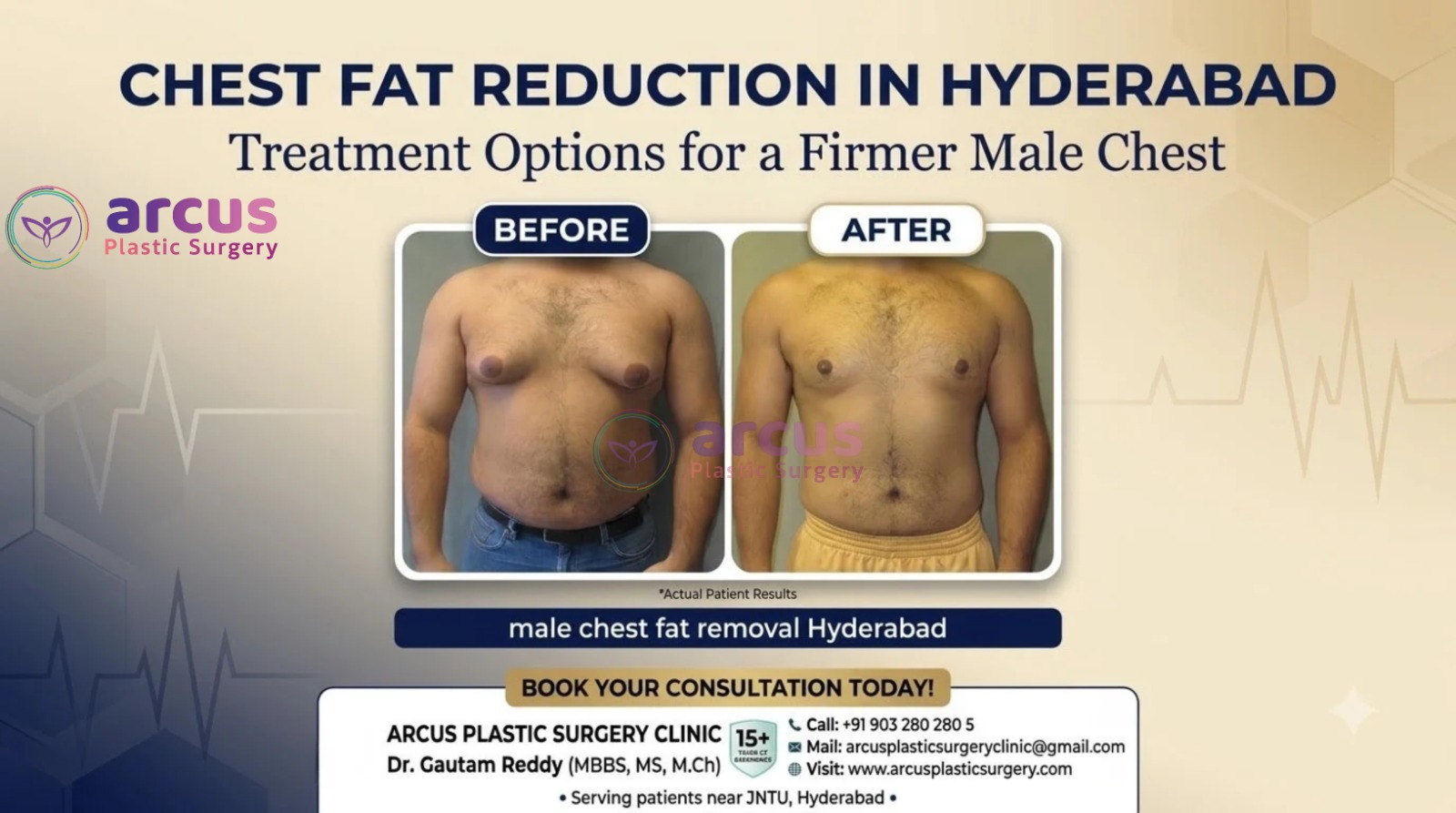
Understanding Chest Fat Reduction Clinic Hyderabad becomes important if you have a fuller male chest and often become embarrassed because of it. A fuller male chest can develop for several reasons. For some men, the change is related to an increase in body fat; for others, glandular breast tissue contributes to the shape. Loose skin after significant weight loss can also affect the chest contour. Although these concerns may look similar, they do not always respond to the same treatment. Understanding the difference helps patients avoid unrealistic expectations and choose a suitable next step.
Male Chest Fat Removal Clinic in Hyderabad
People searching for male chest fat removal Clinic in Hyderabad often want to know whether exercise, weight management, liposuction, or another procedure can help them achieve a flatter chest. The answer depends on the tissue responsible for the enlargement. Arcus Plastic Surgery in Kukatpally, Hyderabad, provides plastic surgery services, including liposuction and gynecomastia treatment, under Dr. Gautam Reddy. A consultation can help establish the likely cause of chest fullness and explain which treatment options may be appropriate.
What causes excess fat in the male chest?
Fat distribution varies from person to person. Some men tend to store more fat around the abdomen, while others notice fullness in the chest, flanks, or other areas. Weight gain can make this fullness more visible, but chest shape is also influenced by genetics, muscle development, skin elasticity, and the underlying breast tissue.
There are three broad patterns to consider.
Fat-related chest fullness: This is mainly caused by excess fatty tissue in the chest. The area often feels soft, although a physical examination is needed to assess it properly.
Glandular enlargement: True gynecomastia involves the development of male breast gland tissue. It can occur even in men who are not overweight.
A combination of fat and glandular tissue: Both components may contribute to the chest’s appearance. In this situation, reducing fat alone may not fully address the enlargement.
Loose skin can be another factor, particularly after substantial weight loss. A treatment plan should account for skin quality as well as fat and glandular tissue.
Can diet and exercise reduce male chest fat?
A sustainable diet and regular physical activity can help reduce overall body fat. Strength training can also improve the development of the chest muscles, which may change the appearance of the upper body.
However, it is not possible to choose exactly where the body loses fat. Chest exercises do not specifically burn chest fat, and building the pectoral muscles does not remove glandular breast tissue. Some men may see a noticeable change as their overall body fat decreases, while others may continue to have chest fullness.
This is not necessarily a sign that their exercise routine has failed. If the enlargement includes firm glandular tissue or significant loose skin, those components may remain despite weight loss.
People considering surgery should ideally discuss their weight stability and health goals with a clinician. Maintaining a stable weight can make it easier to assess the underlying chest shape and plan treatment. Weight management remains beneficial for general health even when it does not completely resolve the chest concern.
What is male chest fat removal?
Male chest fat removal Hyderabad patients research is commonly associated with liposuction, a surgical procedure that removes localised fat deposits. It is intended to improve body contour, rather than serve as a general weight-loss treatment.
During liposuction, the surgeon makes small incisions and uses a thin tube called a cannula to remove fat. The technique, anaesthesia, and amount of tissue treated depend on the individual case.
Liposuction may be appropriate when excess fat is the main reason for chest fullness and the skin is expected to adapt reasonably well to the reduced volume. It is not a treatment for every cause of male breast enlargement.
If firm glandular tissue is present, liposuction alone may leave a raised or puffy area beneath the nipple. If loose skin is substantial, removing fat without addressing the skin may leave the chest looking less firm than expected.
A qualified surgeon should explain what liposuction can achieve in the individual case and whether another approach is more appropriate.
How is chest fat different from gynecomastia?
This is one of the most important distinctions for patients considering treatment.
Chest fat refers to adipose tissue, while gynecomastia involves glandular breast tissue. Fat-related enlargement may be associated with overall weight gain, whereas glandular enlargement can occur because of hormonal changes, medication effects, or certain medical conditions.
The two can coexist, and neither can be diagnosed reliably from photographs alone. A clinician may examine the area beneath the nipple, assess the distribution of tissue, and review the patient’s medical history.
When the enlargement is mainly fatty, weight management or liposuction may be discussed. When glandular tissue is prominent, surgical excision may be needed. If both are present, combined treatment may be considered.
Patients should also seek medical assessment if enlargement develops suddenly, is mainly one-sided, or is associated with a hard lump, nipple discharge, skin changes, or other unusual symptoms. These features need evaluation rather than being assumed to represent ordinary chest fat.
Which treatment options are available?
Treatment depends on the cause, severity, skin quality, medical history, and patient goals.
1. Lifestyle and weight management
When chest fullness is mainly related to overall body fat, a sustainable approach to nutrition and exercise may help. It is not necessary or advisable to pursue extreme diets in an attempt to change one specific area of the body. A healthcare professional can help patients choose an appropriate approach when weight management is difficult or other health issues are present.
2. Liposuction
Liposuction can reduce localised fatty tissue through small incisions. It is most suitable when fat is the principal concern and the skin is likely to adapt adequately. It does not remove all glandular tissue and cannot guarantee a perfectly flat chest.
3. Glandular tissue excision
When true gynecomastia contributes to chest enlargement, the surgeon may remove glandular tissue through an incision, often near the edge of the areola. The location and size of the incision depend on the anatomy and amount of tissue involved.
4. Combined liposuction and gland removal
Patients with both fatty and glandular enlargement may benefit from a combination of techniques. The aim is to address the different components of the chest rather than treating only the part that is easiest to remove.
5. Skin removal
Some patients have loose skin after substantial weight loss or because of more extensive chest enlargement. Removing excess skin may improve the contour, but it can require longer incisions and leave more noticeable scars. The surgeon should explain these trade-offs before a decision is made.
Not everyone requires surgery. The appropriate plan should be based on a proper examination and a discussion of the likely benefits and limitations.
Who may be suitable for chest contouring?
Suitability depends on more than the amount of fat present. A surgeon may consider whether the patient’s weight is relatively stable, whether there is excess glandular tissue, how elastic the skin is, and whether the patient is in suitable general health.
Patients should disclose relevant medical conditions, medicines, supplements, smoking or nicotine use, and previous operations. These factors may influence the surgical plan and healing.
The patient should also have realistic expectations. Liposuction can improve the shape of a particular area, but it does not guarantee a specific body type, replace healthy lifestyle habits, or prevent future weight gain.
If a medical condition or medication is contributing to breast enlargement, that issue may need evaluation before cosmetic surgery is considered.
What happens during a chest fat reduction consultation?
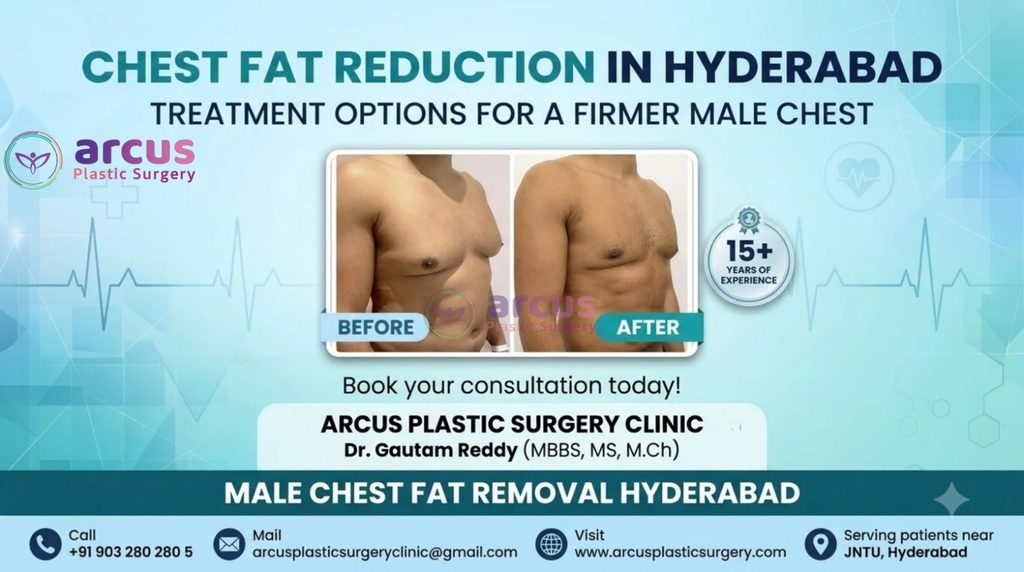
A consultation usually starts with a discussion of the patient’s concerns and goals. The doctor may ask when the chest fullness developed, whether it has changed with weight loss, and whether there is pain or tenderness.
A physical examination helps assess fat distribution, glandular tissue, skin elasticity, nipple position, and symmetry. If the findings suggest true gynecomastia or another medical issue, additional assessment may be recommended.
Patients should ask what treatment is being proposed and why. Useful questions include:
- Is my chest enlargement mainly fat, glandular tissue, or both?
- Would weight management be useful in my case?
- Is liposuction alone likely to address the concern?
- Would gland removal or skin removal be necessary?
- Where will the incisions be placed?
- What scars and contour changes should I expect?
- What are the possible complications?
- How long will I need to limit exercise?
- What does the quoted treatment cost include?
These questions help patients compare options based on clinical suitability rather than advertising claims.
Recovery after male chest contouring
Recovery varies with the extent of surgery and the patient’s individual healing response. Swelling, bruising, tenderness, and temporary changes in sensation may occur. Some patients return to routine activities relatively soon, but physically demanding work and strenuous exercise can require a longer recovery period.
A compression garment may be recommended to help support the treated area and manage swelling. The surgical team should explain how long to wear it and how to care for the incisions.
Patients should avoid heavy lifting and chest workouts until the operating surgeon confirms that it is safe. Early activity should follow the specific instructions provided by the surgical team.
The chest may appear swollen or uneven initially. This does not necessarily indicate the final result, because swelling settles gradually and the tissues need time to heal. The final contour may take several months to become clear.
Contact the surgical team if there is increasing redness, worsening pain, fever, unusual discharge, or sudden swelling. Severe chest pain or difficulty breathing requires urgent medical attention.
Risks and limitations of chest fat removal
Liposuction and other chest contouring procedures have potential risks. These include bleeding, infection, fluid accumulation, contour irregularities, asymmetry, scarring, changes in skin sensation, and the possibility of additional surgery. The likelihood of complications depends on the procedure and individual factors.
Skin elasticity affects how the chest looks after fat removal. If the skin does not contract sufficiently, some looseness may remain. Removing more fat is not always the answer, because excessive removal can create depressions or an uneven appearance.
Liposuction also does not treat the underlying causes of glandular breast enlargement. When the diagnosis is incorrect or the treatment plan does not account for glandular tissue, the outcome may not meet the patient’s expectations.
A responsible surgeon should discuss these limitations in advance. Patients should be cautious of claims that promise perfect results, no scars, or no risk.
How to choose a chest contouring surgeon in Hyderabad
When comparing providers, patients should check the surgeon’s specialist qualifications, experience with the relevant procedure, and the safety arrangements at the facility where surgery will occur.
The consultation should include an examination, a clear explanation of the recommended technique, discussion of complications, and instructions for recovery. Patients should also understand who will provide follow-up care and how concerns will be handled after surgery.
It is reasonable to ask for an itemised estimate that explains which services are included. Treatment costs vary according to the procedure, anaesthesia, facility, and individual requirements, so a generic online price may not reflect the actual cost.
Arcus Plastic Surgery is located in Kukatpally, Hyderabad. Patients considering chest contouring can consult Dr. Gautam Reddy to discuss whether the enlargement is primarily fat-related, glandular, or mixed and to understand the options available.
Frequently asked questions
1. Can chest fat be removed without surgery?
If chest fullness is mainly caused by fat, overall weight management may reduce it. However, fat cannot be selectively reduced from only the chest, and glandular tissue may remain.
2. Is liposuction enough for male chest reduction?
It may be enough when excess fat is the main issue. If firm glandular tissue or significant loose skin is present, another technique or a combination may be required.
3. Will chest fat return after liposuction?
Liposuction removes some fat cells from the treated area, but remaining fat cells can enlarge with weight gain. Maintaining a stable weight helps preserve the contour.
4. Does chest fat reduction treat gynecomastia?
It may treat the fatty component, but it does not reliably remove established glandular tissue. A clinical examination is needed to determine the appropriate treatment.
5. Will I have visible scars?
Liposuction uses small incisions, which can still leave scars. Gland removal or skin excision may require different or larger incisions. Scar visibility varies from person to person.
6. How soon can I exercise after chest contouring?
Light activity and strenuous exercise have different recovery requirements. Follow the operating surgeon’s instructions before resuming weightlifting, chest exercises, or high-intensity workouts.
7. Can chest contouring tighten loose skin?
Liposuction alone cannot reliably correct substantial loose skin. Skin removal may be considered in selected cases, but it involves additional scars and recovery considerations.
Conclusion
Chest fullness in men can result from fat, glandular tissue, loose skin, or a combination of these factors. Weight management may help some patients, while others may need liposuction, glandular tissue removal, or a combined approach. The most important step is to establish the cause before choosing treatment.
For people exploring chest contouring in Hyderabad, Arcus Plastic Surgery provides an opportunity to discuss their concerns with Dr. Gautam Reddy. A personalised consultation can help clarify what is contributing to the chest shape, what improvement may be possible, and what risks and recovery requirements should be considered.